Word Explanation
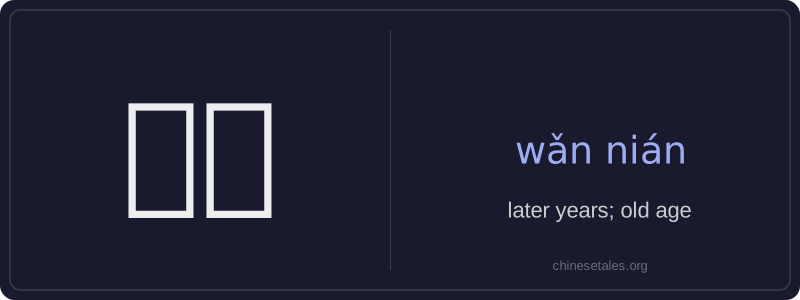
晚年 (wǎn nián) literally combines 晚 (‘late’) and 年 (‘year’ or ‘years’), meaning the final stage of a person’s life—typically from about age 60 or retirement onward. It carries a respectful, often reflective or dignified tone, emphasizing the period after active working life, when people may focus on family, leisure, health, or legacy. Unlike neutral terms like 老年 (lǎo nián, ‘old age’), 晚年 often implies a sense of completion, quietude, or even reverence, especially in formal writing or respectful speech about elders.
The term is commonly used in contexts discussing quality of life, care for seniors, historical figures’ final years, or philosophical reflections on aging. It rarely appears in casual daily conversation among young people but is frequent in news reports about elder welfare, biographies, literature, and policy documents. While it can describe any person’s later years, it’s most often applied to those who have lived full, socially recognized lives—and sometimes subtly connotes peacefulness or fulfillment, though not always.
Example Sentences
Related Words
见面
见面 literally means 'see face' — combining 见 (t
背后
背后 literally means 'back + behind' and functions
中学
'Zhōngxué' literally combines 'zhōng' (middle)
面条
‘面条’ (miàn tiáo) literally means ‘flour str
后来
Later (hòulái) is an adverb meaning 'afterwards'
我的
我的 (wǒ de) is a possessive pronoun meaning 'my'
在家
'Zài jiā' literally combines the preposition 'z
不对
不对 (bù duì) literally combines 不 (bù), meani