Word Explanation
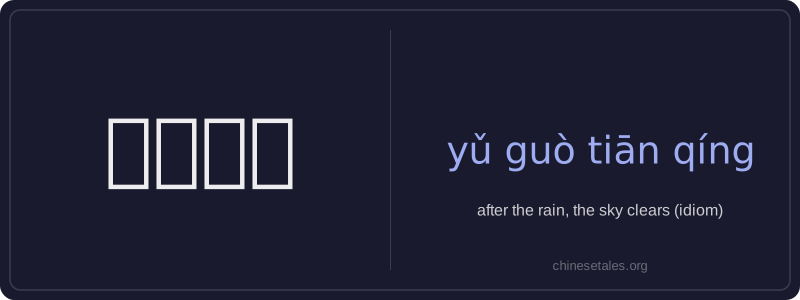
‘Yǔ guò tiān qíng’ literally means ‘after the rain, the sky clears’ — a vivid image of clouds parting and sunlight returning. Each character contributes to this natural sequence: 雨 (rain), 过 (passes/ends), 天 (sky), 晴 (clear, sunny). As an idiom, it’s used metaphorically to describe a sudden improvement after hardship or difficulty — such as resolving a conflict, recovering from illness, or overcoming emotional distress.
This phrase conveys optimism and renewal, often implying that difficulties are temporary and relief is inevitable. It’s common in both spoken and written Chinese, especially in encouraging contexts like letters, speeches, or conversations about personal growth. While rooted in weather imagery, its emotional resonance makes it far more frequent in discussions about feelings, relationships, or life transitions than in actual meteorology.
Example Sentences
Related Words
见面
见面 literally means 'see face' — combining 见 (t
背后
背后 literally means 'back + behind' and functions
中学
'Zhōngxué' literally combines 'zhōng' (middle)
面条
‘面条’ (miàn tiáo) literally means ‘flour str
后来
Later (hòulái) is an adverb meaning 'afterwards'
我的
我的 (wǒ de) is a possessive pronoun meaning 'my'
在家
'Zài jiā' literally combines the preposition 'z
不对
不对 (bù duì) literally combines 不 (bù), meani