Word Explanation
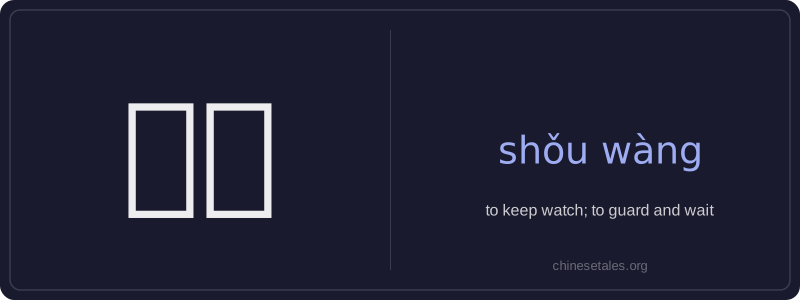
守望 is a compound verb meaning 'to keep watch' or 'to guard and wait'—often with quiet vigilance, patience, and protective intent. The first character 守 (shǒu) means 'to guard, defend, or maintain,' while the second 望 (wàng) means 'to look toward, gaze, or hope for.' Together, they evoke an image of someone standing watch—not just observing, but remaining alert and committed over time, often for something or someone vulnerable. It carries a gentle, earnest tone, more poetic and less militaristic than words like 防守 (fángshǒu, 'defense').
This word appears frequently in ecological, agricultural, or community contexts—especially when describing people protecting wildlife habitats, monitoring endangered species, or safeguarding shared resources. It’s also used metaphorically in literature and speeches to express care, responsibility, and hopeful anticipation. While it can be used literally (e.g., watching over livestock), its emotional weight leans toward dedication, stewardship, and quiet perseverance.
Example Sentences
Related Words
见面
见面 literally means 'see face' — combining 见 (t
背后
背后 literally means 'back + behind' and functions
中学
'Zhōngxué' literally combines 'zhōng' (middle)
面条
‘面条’ (miàn tiáo) literally means ‘flour str
后来
Later (hòulái) is an adverb meaning 'afterwards'
我的
我的 (wǒ de) is a possessive pronoun meaning 'my'
在家
'Zài jiā' literally combines the preposition 'z
不对
不对 (bù duì) literally combines 不 (bù), meani