Word Explanation
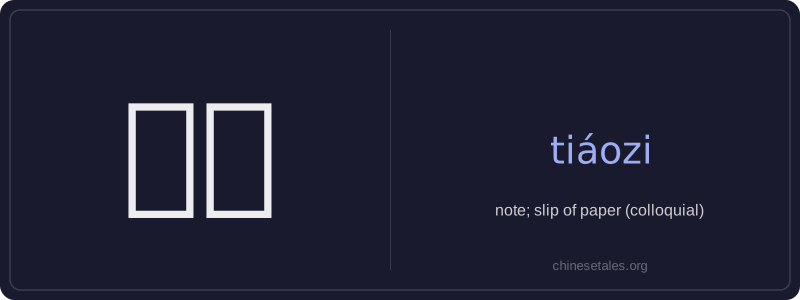
'条子' (tiáozi) is a colloquial noun meaning 'note' or 'slip of paper' — typically a small, handwritten or printed piece of paper used for quick communication. The character 条 (tiáo) originally means 'strip' or 'long narrow object', and 子 (zi) is a common diminutive or nominal suffix. Together, they evoke the physical shape and informal nature of a note — thin, portable, and temporary. It's widely used in everyday spoken Mandarin, especially in workplaces, schools, or casual settings where people leave reminders, instructions, or short messages.
This term carries a relaxed, slightly informal register — it would sound odd in formal documents or official announcements. You’ll often hear it in phrases like '写个条子' (write a note) or '留张条子' (leave a note). While not slang per se, it’s noticeably more casual than the standard word '便条' (biàntiáo), and rarely appears in formal writing or news reports.
Example Sentences
Related Words
见面
见面 literally means 'see face' — combining 见 (t
背后
背后 literally means 'back + behind' and functions
我的
我的 (wǒ de) is a possessive pronoun meaning 'my'
中学
'Zhōngxué' literally combines 'zhōng' (middle)
面条
‘面条’ (miàn tiáo) literally means ‘flour str
后来
Later (hòulái) is an adverb meaning 'afterwards'
在家
'Zài jiā' literally combines the preposition 'z
不对
不对 (bù duì) literally combines 不 (bù), meani