Word Explanation
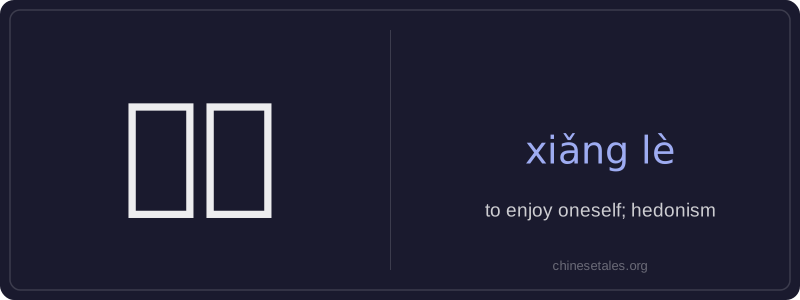
享乐 (xiǎng lè) literally combines 享 (to enjoy, to partake of) and 乐 (joy, pleasure), forming a compound meaning 'the pursuit or act of enjoying pleasure' — especially sensory or worldly pleasures. As a noun, it refers to hedonism or indulgent enjoyment; as a verb, it means 'to indulge in pleasure' or 'to live for enjoyment.' It often carries a slightly negative or critical connotation in formal or moral contexts, suggesting excess, self-indulgence, or neglect of duty or responsibility.
The term appears frequently in discussions about lifestyle choices, philosophical values, and social critique — for example, contrasting Confucian ideals of diligence and restraint with modern consumer culture. While neutral in some descriptive contexts (e.g., 'a period of享乐'), it’s rarely used positively without qualification. It’s more common in written Chinese and formal speech than in casual conversation, where simpler terms like 玩得开心 (having fun) or 放松 (relaxing) are preferred.
Example Sentences
Related Words
见面
见面 literally means 'see face' — combining 见 (t
背后
背后 literally means 'back + behind' and functions
我的
我的 (wǒ de) is a possessive pronoun meaning 'my'
中学
'Zhōngxué' literally combines 'zhōng' (middle)
面条
‘面条’ (miàn tiáo) literally means ‘flour str
后来
Later (hòulái) is an adverb meaning 'afterwards'
在家
'Zài jiā' literally combines the preposition 'z
不对
不对 (bù duì) literally combines 不 (bù), meani