Word Explanation
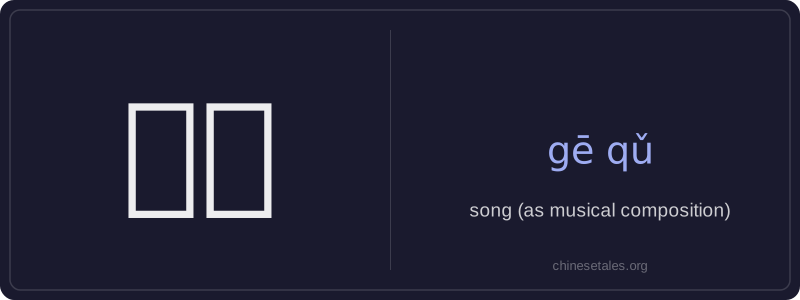
歌曲 (gē qǔ) means 'song'—specifically a musical composition with lyrics and melody, as opposed to instrumental music. The first character 歌 (gē) means 'song' or 'singing', emphasizing vocal performance and words; the second character 曲 (qǔ) means 'melody' or 'tune', referring to the musical structure. Together, they form a compound noun that highlights both lyrical and musical elements, making it the standard term for a complete, structured song in Mandarin.
This word is used broadly: in daily conversation ('I love this song'), media ('a popular song'), education ('sing a children's song'), and digital contexts ('download a song'). It’s neutral in register—appropriate in formal writing, casual speech, and song titles. Unlike 乐曲 (yuè qǔ), which stresses instrumental pieces, 歌曲 always implies singing and lyrics, even if the focus is on the music itself.
Example Sentences
Related Words
见面
见面 literally means 'see face' — combining 见 (t
背后
背后 literally means 'back + behind' and functions
我的
我的 (wǒ de) is a possessive pronoun meaning 'my'
中学
'Zhōngxué' literally combines 'zhōng' (middle)
面条
‘面条’ (miàn tiáo) literally means ‘flour str
后来
Later (hòulái) is an adverb meaning 'afterwards'
在家
'Zài jiā' literally combines the preposition 'z
不对
不对 (bù duì) literally combines 不 (bù), meani