Word Explanation
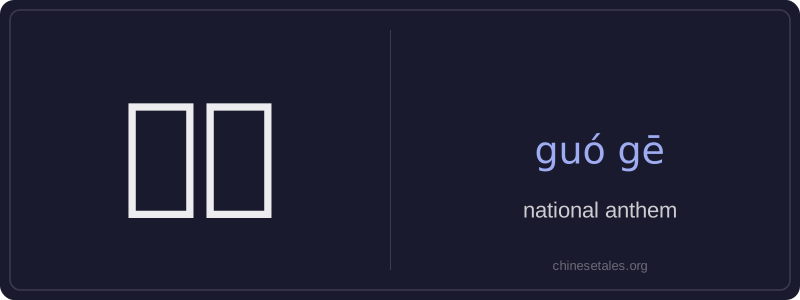
‘国歌’ literally means ‘country song’ — combining 国 (guó), meaning ‘nation’ or ‘country’, and 歌 (gē), meaning ‘song’ or ‘melody’. Together, they form a compound noun referring specifically to the official national anthem of a sovereign state. Unlike ordinary songs, a 国歌 is legally designated, carries deep symbolic weight, and is performed at formal national events such as flag-raising ceremonies, international sports competitions, and state functions.
In China, the national anthem is the ‘March of the Volunteers’ (《义勇军进行曲》), composed in 1935 and officially adopted in 1949. When played, people are expected to stand respectfully and remain silent — reflecting its solemn, patriotic function. The term 国歌 is used exclusively for national anthems; regional or organizational songs (e.g., school anthems) are never called 国歌, even if they serve similar ceremonial roles.
Example Sentences
Related Words
见面
见面 literally means 'see face' — combining 见 (t
背后
背后 literally means 'back + behind' and functions
我的
我的 (wǒ de) is a possessive pronoun meaning 'my'
中学
'Zhōngxué' literally combines 'zhōng' (middle)
面条
‘面条’ (miàn tiáo) literally means ‘flour str
后来
Later (hòulái) is an adverb meaning 'afterwards'
在家
'Zài jiā' literally combines the preposition 'z
不对
不对 (bù duì) literally combines 不 (bù), meani