Word Explanation
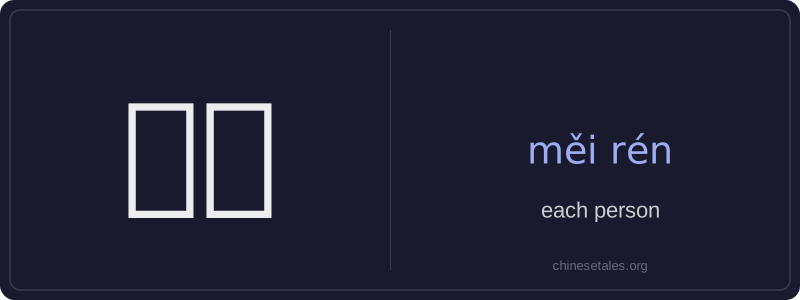
每人 literally combines 每 (měi, 'each' or 'every') and 人 (rén, 'person'), forming a pronoun meaning 'each person' or 'everyone individually'. It emphasizes distribution or allocation on a per-person basis—not as a group, but as separate individuals. It functions like a quantified pronoun and typically appears before verbs or at the beginning of a clause.
This word is common in instructions, rules, schedules, and everyday logistics—such as sharing resources, assigning tasks, or stating entitlements. Unlike 全体 (quántǐ, 'the whole group') or 大家 (dàjiā, 'everyone' collectively), 每人 highlights individual units within a group. It’s neutral in register and widely used in both spoken and written Chinese, from classroom directions to official notices.
Example Sentences
Related Words
见面
见面 literally means 'see face' — combining 见 (t
背后
背后 literally means 'back + behind' and functions
我的
我的 (wǒ de) is a possessive pronoun meaning 'my'
中学
'Zhōngxué' literally combines 'zhōng' (middle)
面条
‘面条’ (miàn tiáo) literally means ‘flour str
后来
Later (hòulái) is an adverb meaning 'afterwards'
在家
'Zài jiā' literally combines the preposition 'z
不对
不对 (bù duì) literally combines 不 (bù), meani