Word Explanation
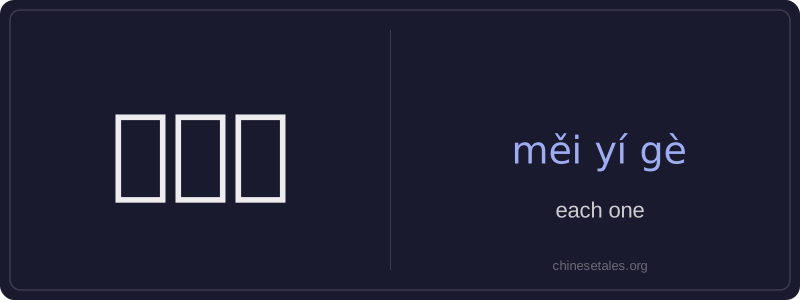
每一个 means 'each one' or 'every single one', emphasizing individual members within a group. It combines three characters: 每 (měi, 'each/every'), 一 (yī, 'one'), and 个 (gè, a common measure word for general countable nouns). Unlike the simpler 每 (měi) alone—which can mean 'every' but often requires a noun (e.g., 每天 'every day')—每一个 explicitly highlights singularity and inclusivity: not just 'all', but 'each and every individual without exception'.
This phrase is frequently used in spoken and written Chinese to stress completeness and attention to detail. It commonly modifies nouns (e.g., 每一个学生 'each student', 每一个问题 'each question') and often appears in instructions, descriptions, or empathetic statements. It carries a slightly more careful, thorough, or caring tone than 每, making it common in education, caregiving, service contexts, and daily routines where precision or personalization matters.
Example Sentences
Related Words
见面
见面 literally means 'see face' — combining 见 (t
背后
背后 literally means 'back + behind' and functions
我的
我的 (wǒ de) is a possessive pronoun meaning 'my'
中学
'Zhōngxué' literally combines 'zhōng' (middle)
面条
‘面条’ (miàn tiáo) literally means ‘flour str
后来
Later (hòulái) is an adverb meaning 'afterwards'
在家
'Zài jiā' literally combines the preposition 'z
不对
不对 (bù duì) literally combines 不 (bù), meani