Word Explanation
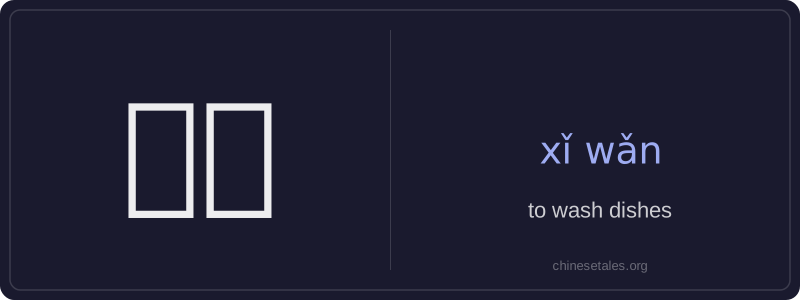
洗碗 (xǐ wǎn) literally means 'to wash bowls' but is used broadly in Chinese to mean 'to wash dishes' — including plates, cups, chopsticks, and other kitchenware. The first character 洗 (xǐ) means 'to wash' or 'to clean', while the second character 碗 (wǎn) means 'bowl', serving as a representative noun for dishware in general. This compound is a common, everyday verb that reflects routine household responsibilities.
It frequently appears in contexts involving domestic chores, family roles, or shared living arrangements. In spoken Chinese, 洗碗 is often used in simple sentence structures like '我来洗碗' ('I’ll wash the dishes') or '谁洗碗?' ('Who’s washing the dishes?'). Unlike English, it’s rarely broken down or modified with particles like 'up' or 'out'; it functions as a single, unchangeable verb unit. It’s neutral in register — appropriate for both casual conversation and formal descriptions of daily life.
Example Sentences
Related Words
见面
见面 literally means 'see face' — combining 见 (t
背后
背后 literally means 'back + behind' and functions
我的
我的 (wǒ de) is a possessive pronoun meaning 'my'
中学
'Zhōngxué' literally combines 'zhōng' (middle)
面条
‘面条’ (miàn tiáo) literally means ‘flour str
后来
Later (hòulái) is an adverb meaning 'afterwards'
在家
'Zài jiā' literally combines the preposition 'z
不对
不对 (bù duì) literally combines 不 (bù), meani