Word Explanation
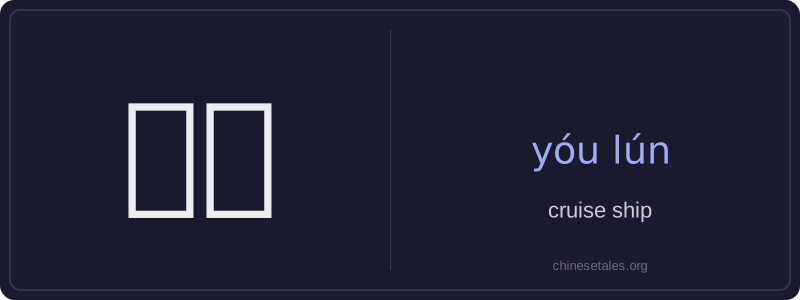
‘游轮’ (yóu lún) literally combines ‘游’ (yóu), meaning ‘to travel’, ‘to cruise’, or ‘to tour’, and ‘轮’ (lún), meaning ‘wheel’ but historically used in compound words for ‘ship’ or ‘vessel’ (as in 轮船, lúnchuán — steamship or vessel). Together, 游轮 specifically refers to a large, luxurious passenger ship designed for leisure voyages — what English speakers call a ‘cruise ship’. Unlike cargo ships or ferries, 游轮 emphasizes comfort, onboard amenities, and scenic itineraries, often sailing between popular coastal destinations or islands.
This term is widely used in tourism, travel advertisements, and maritime contexts in Chinese-speaking regions. It carries a connotation of relaxation, vacation, and premium service. While 轮船 is a general term for any powered ship, 游轮 is narrower and more specific — never used for commercial freight or military vessels. It’s commonly paired with verbs like 乘坐 (to board), 预订 (to book), or 停靠 (to dock), and often appears with destination names (e.g., 加勒比海游轮).
Example Sentences
Related Words
见面
见面 literally means 'see face' — combining 见 (t
背后
背后 literally means 'back + behind' and functions
我的
我的 (wǒ de) is a possessive pronoun meaning 'my'
中学
'Zhōngxué' literally combines 'zhōng' (middle)
面条
‘面条’ (miàn tiáo) literally means ‘flour str
后来
Later (hòulái) is an adverb meaning 'afterwards'
在家
'Zài jiā' literally combines the preposition 'z
不对
不对 (bù duì) literally combines 不 (bù), meani