Word Explanation
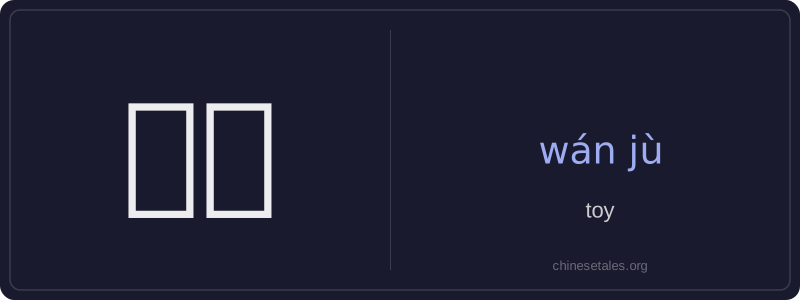
玩具 (wán jù) means 'toy' — an object designed for play, especially by children. The first character 玩 (wán) means 'to play' or 'to have fun', and the second character 具 (jù) means 'tool', 'instrument', or 'article'. Together, they literally mean 'a tool for playing', highlighting the functional and joyful purpose of toys in Chinese culture. Toys can be simple (like a wooden top) or complex (like electronic robots), but the word always implies something intended for amusement or learning through play.
This noun is commonly used in everyday contexts: shopping for gifts, describing childhood memories, discussing child development, or talking about hobbies like model-building or collecting vintage toys. It’s neutral in register — appropriate in both casual speech and formal writing — and often appears with measure words like 个 (gè) or 件 (jiàn). While usually referring to physical objects, it may occasionally be used metaphorically (e.g., calling a gadget a 'toy' for adults), though this is less common than in English.
Example Sentences
Related Words
见面
见面 literally means 'see face' — combining 见 (t
背后
背后 literally means 'back + behind' and functions
我的
我的 (wǒ de) is a possessive pronoun meaning 'my'
中学
'Zhōngxué' literally combines 'zhōng' (middle)
面条
‘面条’ (miàn tiáo) literally means ‘flour str
后来
Later (hòulái) is an adverb meaning 'afterwards'
在家
'Zài jiā' literally combines the preposition 'z
不对
不对 (bù duì) literally combines 不 (bù), meani