Word Explanation
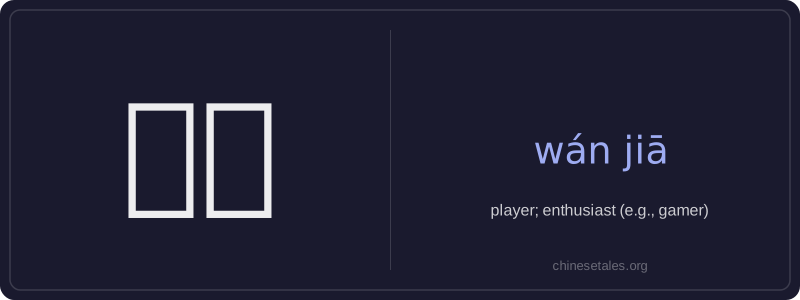
玩家 literally means 'play person' — combining 玩 (wán, 'to play') and 家 (jiā, 'person/expert', as in 'specialist' or 'enthusiast'). Unlike 家 meaning 'family' or 'home', here it functions as a suffix denoting someone deeply engaged in an activity. While it can refer broadly to enthusiasts of any hobby (e.g., chess players, model train fans), it is most commonly used for video game players — especially in online, mobile, or console gaming contexts.
The term carries a neutral-to-positive connotation, suggesting active participation and interest rather than casual involvement. It’s widely used in tech media, app stores, gaming forums, and marketing. Though not strictly formal, it’s appropriate in everyday speech and writing — more natural and current than the older term 游戏者 (yóu xì zhě) and less technical than 用户 (yònghù, 'user').
Example Sentences
Related Words
见面
见面 literally means 'see face' — combining 见 (t
背后
背后 literally means 'back + behind' and functions
我的
我的 (wǒ de) is a possessive pronoun meaning 'my'
中学
'Zhōngxué' literally combines 'zhōng' (middle)
面条
‘面条’ (miàn tiáo) literally means ‘flour str
后来
Later (hòulái) is an adverb meaning 'afterwards'
在家
'Zài jiā' literally combines the preposition 'z
不对
不对 (bù duì) literally combines 不 (bù), meani