Word Explanation
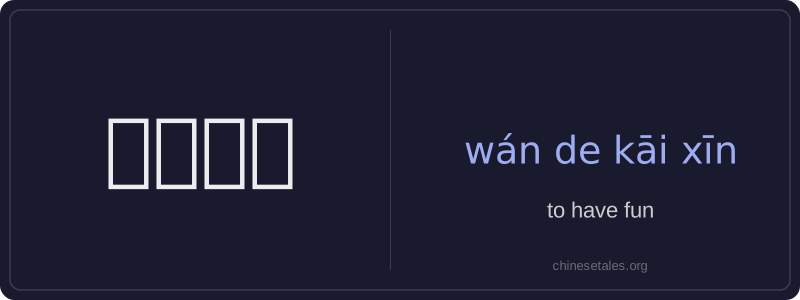
'玩得开心' is a common verb phrase meaning 'to have fun' or 'to enjoy oneself', especially during leisure activities, games, travel, or social gatherings. Literally, it breaks down as 玩 (to play), 得 (a structural particle introducing a complement of degree or result), and 开心 (happy, joyful). Together, the structure 'V + 得 + adjective' expresses how an action is carried out — here, indicating the manner or emotional outcome of playing: 'play in a happy way'. It’s used almost exclusively after the subject and often follows time or location phrases.
This phrase is informal and warm, frequently heard in spoken Chinese among friends, family, or when encouraging others — for example, before someone goes out or on vacation. It rarely appears in formal writing or official contexts. While it literally includes 'play', it’s not limited to children or games; adults use it broadly to convey genuine enjoyment of any activity, from hiking to dinner parties. The complement '开心' must follow 得 directly, with no intervening words.
Example Sentences
Related Words
见面
见面 literally means 'see face' — combining 见 (t
背后
背后 literally means 'back + behind' and functions
我的
我的 (wǒ de) is a possessive pronoun meaning 'my'
中学
'Zhōngxué' literally combines 'zhōng' (middle)
面条
‘面条’ (miàn tiáo) literally means ‘flour str
后来
Later (hòulái) is an adverb meaning 'afterwards'
在家
'Zài jiā' literally combines the preposition 'z
不对
不对 (bù duì) literally combines 不 (bù), meani