Word Explanation
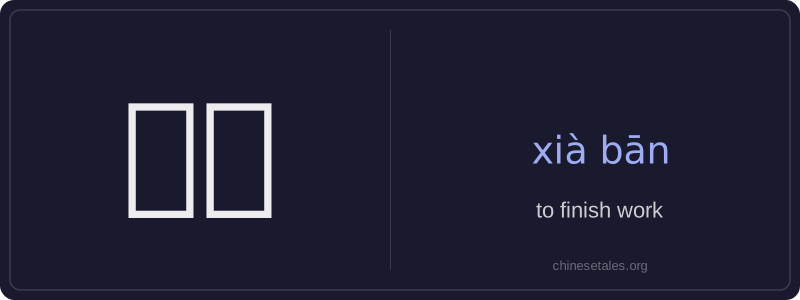
'Xià bān' literally combines 'xià' (to go down, to finish) and 'bān' (shift, work shift), meaning the act of finishing one’s workday. It refers specifically to the moment or action of concluding official working hours — not just leaving a place, but completing assigned duties. This term is deeply embedded in workplace culture and daily scheduling in Chinese-speaking societies.
Unlike general verbs for 'leaving', 'xià bān' carries an institutional nuance: it implies formal employment, fixed schedules, and often coordination with colleagues or transport (e.g., commuting home together). It’s commonly used in time-related contexts ('What time do you xia ban?'), social plans ('Let’s meet after xia ban'), and notifications ('I’ll reply after xia ban'). It’s neutral in register — appropriate in both casual chats and office emails — and almost never used for students, freelancers without set hours, or unpaid activities.
Example Sentences
Related Words
见面
见面 literally means 'see face' — combining 见 (t
背后
背后 literally means 'back + behind' and functions
我的
我的 (wǒ de) is a possessive pronoun meaning 'my'
中学
'Zhōngxué' literally combines 'zhōng' (middle)
面条
‘面条’ (miàn tiáo) literally means ‘flour str
后来
Later (hòulái) is an adverb meaning 'afterwards'
在家
'Zài jiā' literally combines the preposition 'z
不对
不对 (bù duì) literally combines 不 (bù), meani