Word Explanation
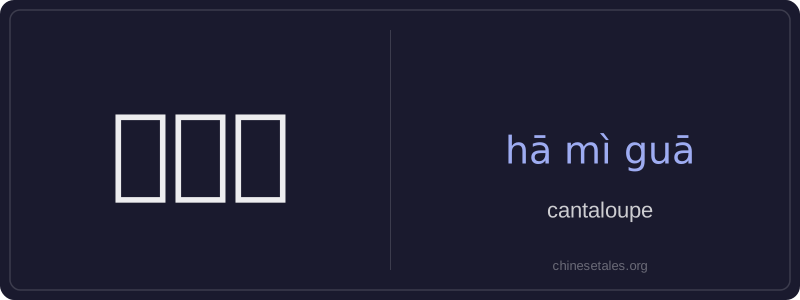
哈密瓜 is a type of sweet, orange-fleshed melon native to the Hami region in Xinjiang, China — hence its name. The first two characters, 哈 and 密, together form 'Hami', a proper noun referring to the city and oasis area famous for producing this fruit. The third character, 瓜, means 'melon' or 'gourd', clearly identifying it as a fruit in the Cucurbitaceae family. Though called 'cantaloupe' in English, it differs botanically from Western cantaloupes and is typically larger, with netted rind and exceptionally high sugar content.
In Chinese, 哈密瓜 is used both literally (to refer to the fruit itself) and figuratively in casual speech — for example, describing something unusually sweet or refreshing. It’s commonly sold whole or pre-cut in markets, featured in fruit platters, desserts, and summer beverages. Unlike generic terms like 西瓜 (watermelon) or 黄瓜 (cucumber), 哈密瓜 always refers specifically to this regional variety, making it a culturally anchored food term.
Example Sentences
Related Words
见面
见面 literally means 'see face' — combining 见 (t
背后
背后 literally means 'back + behind' and functions
我的
我的 (wǒ de) is a possessive pronoun meaning 'my'
中学
'Zhōngxué' literally combines 'zhōng' (middle)
面条
‘面条’ (miàn tiáo) literally means ‘flour str
后来
Later (hòulái) is an adverb meaning 'afterwards'
在家
'Zài jiā' literally combines the preposition 'z
不对
不对 (bù duì) literally combines 不 (bù), meani