Word Explanation
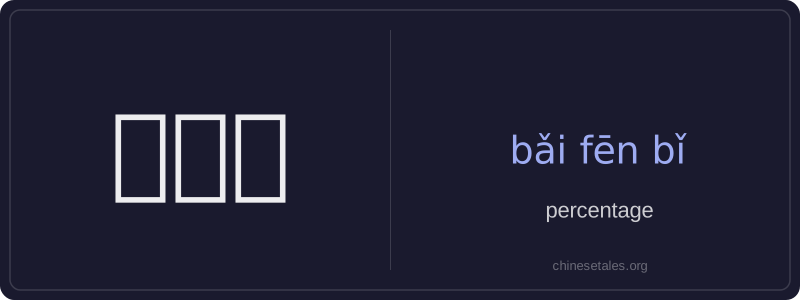
百分比 literally means 'hundred-part ratio' — 百 (bǎi) means 'one hundred', 分 (fēn) means 'part' or 'division', and 比 (bǐ) means 'ratio' or 'comparison'. Together, they express a value as a fraction of 100, used to compare quantities proportionally. It's the standard term for 'percentage' in formal and everyday Chinese, appearing frequently in statistics, finance, education, and daily life — for example, when discussing exam scores, discounts, or population data.
Unlike English, where 'percent' often follows a number (e.g., '75 percent'), 百分比 is typically used *after* the noun it modifies or in subject-predicate constructions (e.g., '这个项目的成功率是95%' or '成功率达到了95%'). The character 比 here does not mean 'to compare' as a verb but functions as a noun meaning 'ratio' — a key nuance learners should note to avoid confusion with the verb 比 (bǐ).
Example Sentences
Related Words
见面
见面 literally means 'see face' — combining 见 (t
背后
背后 literally means 'back + behind' and functions
我的
我的 (wǒ de) is a possessive pronoun meaning 'my'
中学
'Zhōngxué' literally combines 'zhōng' (middle)
面条
‘面条’ (miàn tiáo) literally means ‘flour str
后来
Later (hòulái) is an adverb meaning 'afterwards'
在家
'Zài jiā' literally combines the preposition 'z
不对
不对 (bù duì) literally combines 不 (bù), meani