Word Explanation
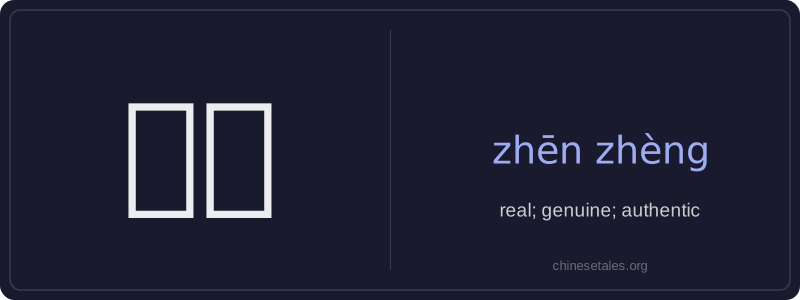
真正 means 'real', 'genuine', or 'authentic' — emphasizing something that is not fake, superficial, or merely apparent, but deeply true in essence. The character 真 (zhēn) means 'true' or 'real', carrying connotations of sincerity and factual accuracy; 正 (zhèng) means 'correct', 'upright', or 'proper', adding a sense of moral or intrinsic rightness. Together, they form a compound adjective that stresses both factual truth and moral authenticity — it’s more emphatic than just 真 alone.
This word commonly modifies nouns (e.g., 真正的朋友 'a genuine friend') or appears after 是 to affirm authenticity (e.g., 这才是真正的勇气 'This is real courage'). It often appears in reflective, evaluative, or emotionally resonant contexts — describing relationships, values, feelings, or qualities that matter deeply, rather than surface appearances.
Example Sentences
Related Words
见面
见面 literally means 'see face' — combining 见 (t
背后
背后 literally means 'back + behind' and functions
我的
我的 (wǒ de) is a possessive pronoun meaning 'my'
中学
'Zhōngxué' literally combines 'zhōng' (middle)
面条
‘面条’ (miàn tiáo) literally means ‘flour str
后来
Later (hòulái) is an adverb meaning 'afterwards'
在家
'Zài jiā' literally combines the preposition 'z
不对
不对 (bù duì) literally combines 不 (bù), meani