Word Explanation
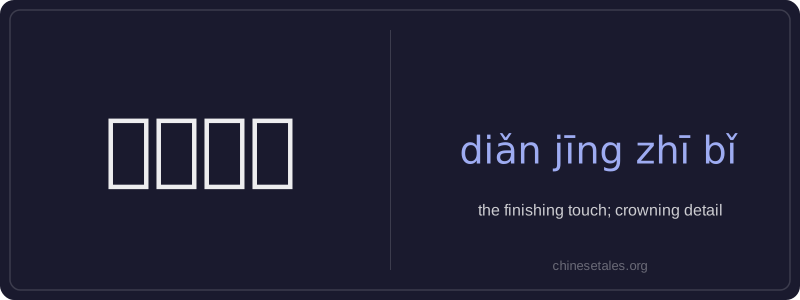
‘点睛之笔’ literally means ‘the brushstroke that adds the pupil to the eye.’ It originates from an ancient Chinese legend about a painter who brought painted dragons to life by adding pupils to their eyes — the final, crucial detail. Though it references painting and animals (dragons), today it’s used metaphorically for any small but decisive element that transforms or perfects something — like a witty line in a speech, a subtle design detail in architecture, or a strategic move in a game.
The phrase emphasizes impact over size: the ‘dotting of the pupil’ is minimal in effort but maximal in effect. It carries positive, appreciative connotation and is common in literary, artistic, business, and everyday evaluative contexts — especially when praising someone’s insight or timing. While the characters include 睛 (eye) and thus connect to Animals thematically, the idiom itself functions abstractly and is not limited to animal-related topics.
Example Sentences
Related Words
见面
见面 literally means 'see face' — combining 见 (t
背后
背后 literally means 'back + behind' and functions
我的
我的 (wǒ de) is a possessive pronoun meaning 'my'
中学
'Zhōngxué' literally combines 'zhōng' (middle)
面条
‘面条’ (miàn tiáo) literally means ‘flour str
后来
Later (hòulái) is an adverb meaning 'afterwards'
在家
'Zài jiā' literally combines the preposition 'z
不对
不对 (bù duì) literally combines 不 (bù), meani