Word Explanation
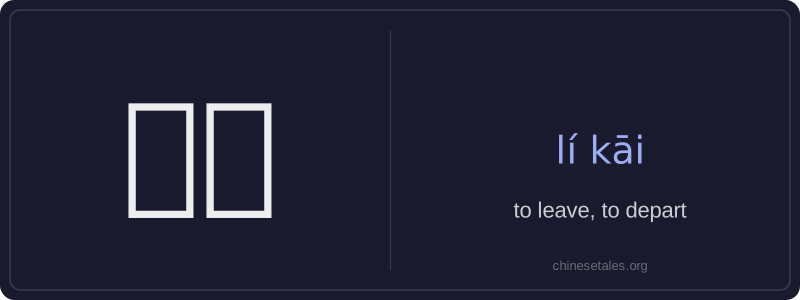
离开 (lí kāi) is a compound verb meaning 'to leave' or 'to depart' — typically referring to physically departing from a place, person, group, or situation. The character 离 (lí) means 'to separate' or 'to part from', while 开 (kāi) adds the sense of 'opening up' or 'setting in motion', together conveying the idea of initiating separation and moving away. It’s commonly used in both formal and informal contexts, such as leaving a room, a city, a job, or even a relationship.
This verb is transitive and usually requires an object indicating what or where one is leaving (e.g., 离开北京, 离开公司). It can also appear without an explicit object when context makes the departure clear. Unlike some other verbs of motion, 离开 does not take aspect particles like 了 or 过 directly after it unless the sentence structure supports them (e.g., 他离开了 → he left; but *他离开了北京 is ungrammatical — correct: 他离开了北京).
Example Sentences
Related Words
见面
见面 literally means 'see face' — combining 见 (t
背后
背后 literally means 'back + behind' and functions
我的
我的 (wǒ de) is a possessive pronoun meaning 'my'
中学
'Zhōngxué' literally combines 'zhōng' (middle)
面条
‘面条’ (miàn tiáo) literally means ‘flour str
后来
Later (hòulái) is an adverb meaning 'afterwards'
在家
'Zài jiā' literally combines the preposition 'z
不对
不对 (bù duì) literally combines 不 (bù), meani