Word Explanation
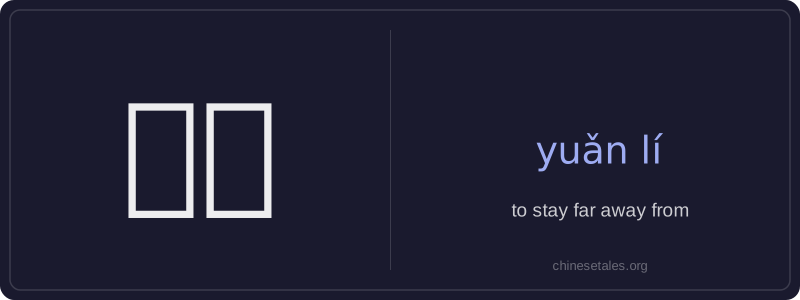
远离 is a verb meaning 'to stay far away from' or 'to keep a safe distance from' something — often used to express avoidance of danger, harm, or undesirable influences. The first character 远 (yuǎn) means 'far' or 'distant', and the second character 离 (lí) means 'to leave', 'to depart', or 'to separate'. Together, they form a compound verb emphasizing intentional, sustained distance — not just physical separation but also emotional or behavioral disengagement.
This word is commonly used in health advisories (e.g., '远离烟酒' — 'stay far away from tobacco and alcohol'), environmental safety ('远离高压线' — 'keep far away from high-voltage power lines'), and digital well-being ('远离不良信息' — 'avoid harmful online content'). It frequently appears in formal warnings, public service announcements, and advice-oriented language. Unlike simple verbs like 离开 (to leave), 远离 implies purposeful, precautionary distancing with a sense of caution or protection.
Example Sentences
Related Words
见面
见面 literally means 'see face' — combining 见 (t
背后
背后 literally means 'back + behind' and functions
我的
我的 (wǒ de) is a possessive pronoun meaning 'my'
中学
'Zhōngxué' literally combines 'zhōng' (middle)
面条
‘面条’ (miàn tiáo) literally means ‘flour str
后来
Later (hòulái) is an adverb meaning 'afterwards'
在家
'Zài jiā' literally combines the preposition 'z
不对
不对 (bù duì) literally combines 不 (bù), meani