Word Explanation
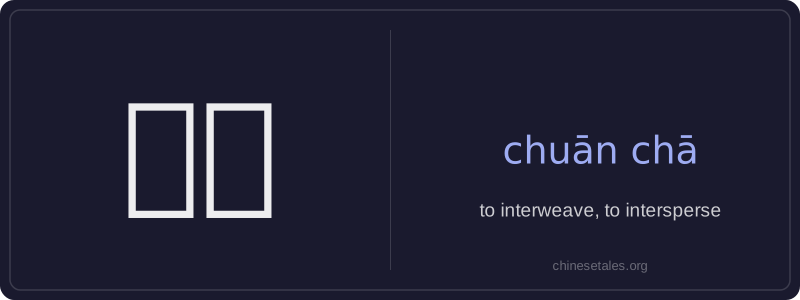
穿插 (chuān chā) is a verb meaning 'to interweave' or 'to intersperse' — literally combining 穿 (chuān, 'to pierce through' or 'to pass through') and 插 (chā, 'to insert' or 'to stick in'). Together, they evoke the image of inserting one element into the gaps or flow of another, like threads woven through fabric or short activities inserted between longer tasks. It emphasizes deliberate, often rhythmic or strategic placement rather than random mixing.
This word is commonly used in contexts involving scheduling, storytelling, teaching, or design — for example, when brief exercises are inserted between lectures, or when descriptive passages are woven into a narrative. It carries a neutral-to-formal register and is frequently found in written Chinese, education materials, and media production. While it can describe physical arrangements (e.g., plants among stones), its most frequent use is abstract: structuring time, information, or content.
Example Sentences
Related Words
见面
见面 literally means 'see face' — combining 见 (t
背后
背后 literally means 'back + behind' and functions
我的
我的 (wǒ de) is a possessive pronoun meaning 'my'
中学
'Zhōngxué' literally combines 'zhōng' (middle)
面条
‘面条’ (miàn tiáo) literally means ‘flour str
后来
Later (hòulái) is an adverb meaning 'afterwards'
在家
'Zài jiā' literally combines the preposition 'z
不对
不对 (bù duì) literally combines 不 (bù), meani