Word Explanation
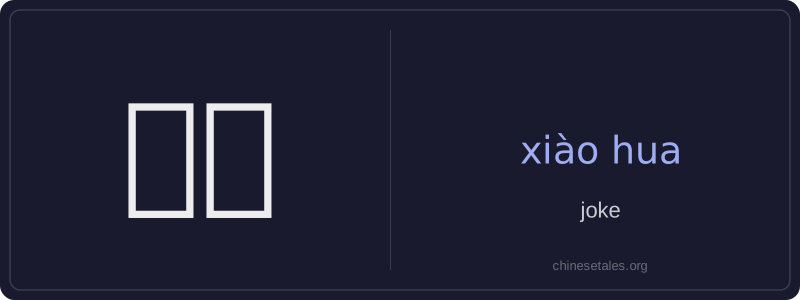
‘笑话’ literally combines ‘笑’ (to laugh) and ‘话’ (speech or words), meaning ‘words that make people laugh’ — in other words, a joke. It refers to a short, humorous story, remark, or situation intended to provoke laughter. Unlike English ‘joke’, which can be a verb (‘to joke’), ‘笑话’ is strictly a noun in Chinese and cannot be used as a verb without additional grammar (e.g., ‘讲笑话’ — ‘to tell a joke’).
This word is neutral in register and widely used in daily conversation, storytelling, and light entertainment. It often appears in contexts like sharing humor with friends, classroom activities, or online memes. While ‘笑话’ can occasionally carry a mildly negative connotation when referring to something absurd or embarrassing (e.g., ‘这简直是个笑话’ — ‘This is just ridiculous’), its primary sense remains positive and playful.
Example Sentences
Related Words
见面
见面 literally means 'see face' — combining 见 (t
背后
背后 literally means 'back + behind' and functions
我的
我的 (wǒ de) is a possessive pronoun meaning 'my'
中学
'Zhōngxué' literally combines 'zhōng' (middle)
面条
‘面条’ (miàn tiáo) literally means ‘flour str
后来
Later (hòulái) is an adverb meaning 'afterwards'
在家
'Zài jiā' literally combines the preposition 'z
不对
不对 (bù duì) literally combines 不 (bù), meani