Word Explanation
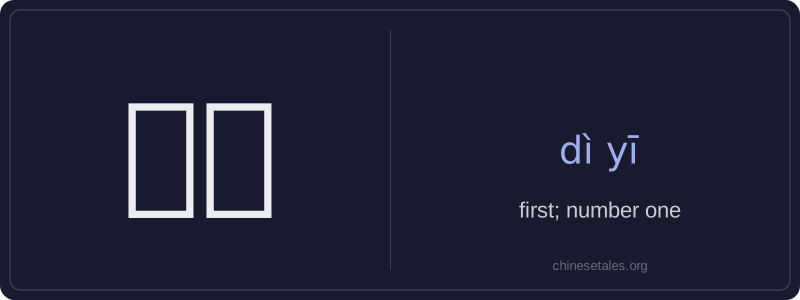
第一 literally means 'the first' and functions as both a numeral (indicating ordinal position) and a noun (meaning 'number one' or 'the top rank'). The character 第 marks ordinal numbers in Chinese, while 一 means 'one'; together, they form the most basic and widely used ordinal expression. It appears in rankings, sequences, introductions ('first of all'), and superlatives ('first choice'). Unlike English, 第一 never changes form—it’s invariant regardless of gender, number, or case.
This term is neutral in register and appropriate in formal and informal contexts, from academic reports to casual conversation. It commonly modifies nouns directly (e.g., 第一课, 'Lesson One') or stands alone as a subject or predicate (e.g., 他是第一, 'He is first'). It’s also used idiomatically in phrases like 第一时间 ('immediately, at the very first moment') and 第一印象 ('first impression'), where it conveys priority or initial occurrence.
Example Sentences
Related Words
见面
见面 literally means 'see face' — combining 见 (t
背后
背后 literally means 'back + behind' and functions
我的
我的 (wǒ de) is a possessive pronoun meaning 'my'
中学
'Zhōngxué' literally combines 'zhōng' (middle)
面条
‘面条’ (miàn tiáo) literally means ‘flour str
后来
Later (hòulái) is an adverb meaning 'afterwards'
在家
'Zài jiā' literally combines the preposition 'z
不对
不对 (bù duì) literally combines 不 (bù), meani