Word Explanation
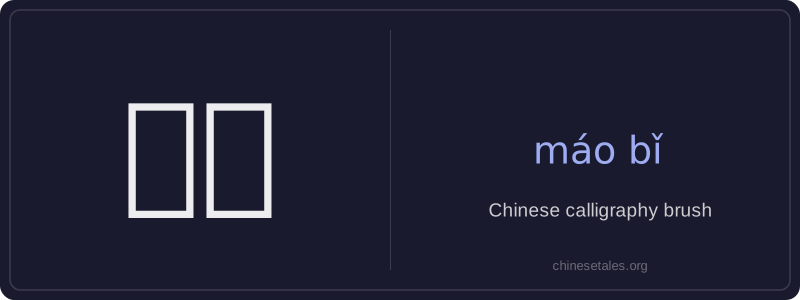
‘Máo bǐ’ literally means ‘hair brush’—‘máo’ (hair) refers to the soft animal-hair bristles (traditionally from weasels, goats, or rabbits), and ‘bǐ’ (brush) denotes the writing instrument itself. Together, they form the standard term for the traditional Chinese calligraphy brush, a tool central to East Asian ink painting and brush writing for over two thousand years.
This brush is not just a writing utensil but a cultural symbol: its flexible tip allows expressive variation in line thickness and texture, reflecting the writer’s skill and intention. It is used with inkstone, inkstick, and rice paper in the ‘Four Treasures of the Study’. While modern pens exist, the máo bǐ remains essential for learning classical calligraphy, art education, and ceremonial writing in China, Japan, and Korea.
Example Sentences
Related Words
见面
见面 literally means 'see face' — combining 见 (t
背后
背后 literally means 'back + behind' and functions
我的
我的 (wǒ de) is a possessive pronoun meaning 'my'
中学
'Zhōngxué' literally combines 'zhōng' (middle)
面条
‘面条’ (miàn tiáo) literally means ‘flour str
后来
Later (hòulái) is an adverb meaning 'afterwards'
在家
'Zài jiā' literally combines the preposition 'z
不对
不对 (bù duì) literally combines 不 (bù), meani