Word Explanation
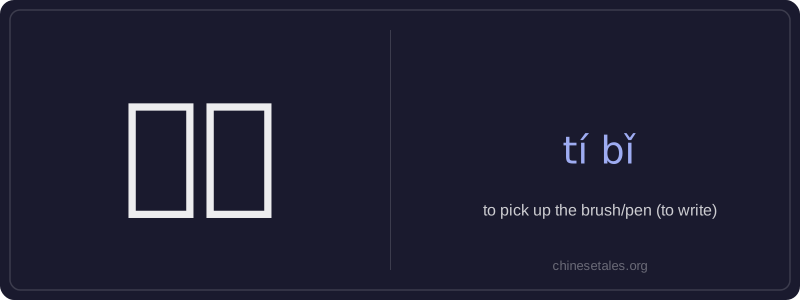
'提笔' literally means 'to lift the brush/pen' and functions as a verb describing the physical act of picking up a writing instrument to begin writing. Though it originated in traditional Chinese calligraphy—where holding the brush correctly is essential—it's now used broadly for any act of starting to write, whether with brush, pen, or even digitally (metaphorically). The character 提 (tí) means 'to lift' or 'to raise', and 笔 (bǐ) means 'brush' or 'pen'; together they evoke the deliberate, often thoughtful, moment before writing begins.
This phrase carries a subtle literary or reflective connotation—it’s rarely used for casual note-taking but appears frequently in essays, speeches, or introspective contexts ('as I pick up my pen to write this letter…'). It may imply preparation, intention, or even emotional weight behind the act of writing, especially in formal or creative expression.
Example Sentences
Related Words
见面
见面 literally means 'see face' — combining 见 (t
背后
背后 literally means 'back + behind' and functions
我的
我的 (wǒ de) is a possessive pronoun meaning 'my'
中学
'Zhōngxué' literally combines 'zhōng' (middle)
面条
‘面条’ (miàn tiáo) literally means ‘flour str
后来
Later (hòulái) is an adverb meaning 'afterwards'
在家
'Zài jiā' literally combines the preposition 'z
不对
不对 (bù duì) literally combines 不 (bù), meani