Word Explanation
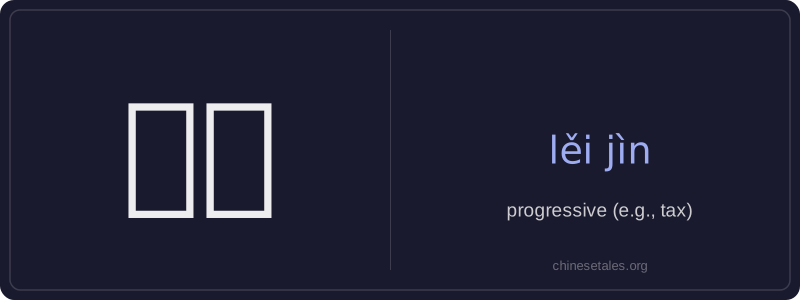
‘累进’ (lěi jìn) is an adjective meaning 'progressive' — describing something that increases step by step, typically in proportion to a base amount. The character 累 (lěi) means 'to accumulate' or 'to pile up', while 进 (jìn) means 'to advance' or 'to move forward'; together, they convey the idea of gradual, tiered advancement. This term is most commonly used in formal or technical contexts, especially in economics and policy, such as '累进税率' (progressive tax rate), where higher income brackets are taxed at increasingly higher rates.
It may also appear in health or education settings to describe staged interventions — for example, '累进式康复训练' (progressive rehabilitation training), where exercise intensity increases gradually over time. Unlike general terms like '逐渐' (gradually), 累进 emphasizes structured, quantifiable escalation across defined levels, not just continuous change. It rarely appears in casual speech and is almost always part of a compound noun or adjective phrase.
Example Sentences
Related Words
见面
见面 literally means 'see face' — combining 见 (t
背后
背后 literally means 'back + behind' and functions
我的
我的 (wǒ de) is a possessive pronoun meaning 'my'
中学
'Zhōngxué' literally combines 'zhōng' (middle)
面条
‘面条’ (miàn tiáo) literally means ‘flour str
后来
Later (hòulái) is an adverb meaning 'afterwards'
在家
'Zài jiā' literally combines the preposition 'z
不对
不对 (bù duì) literally combines 不 (bù), meani