Word Explanation
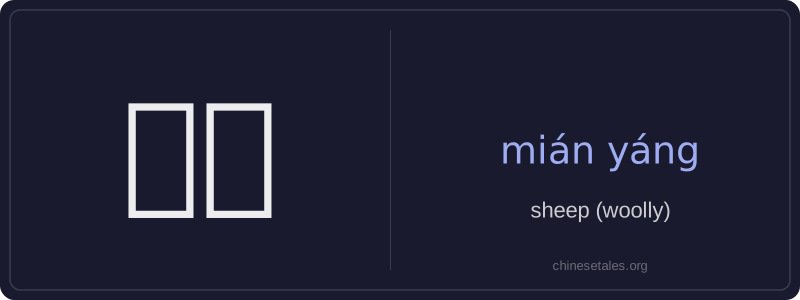
‘绵羊’ literally combines ‘绵’ (mián), meaning ‘cottony,’ ‘soft,’ or ‘woolly,’ and ‘羊’ (yáng), meaning ‘sheep.’ Together, it specifically refers to domestic sheep raised for wool—emphasizing their thick, fluffy fleece. Unlike the general term ‘羊,’ which can refer to any sheep or even goats in broad contexts, ‘绵羊’ is precise and biologically accurate, distinguishing wool-producing sheep from hair sheep or wild relatives like ibex or argali.
This word appears frequently in agricultural, biological, and everyday contexts—such as farm descriptions, children’s books, clothing labels (e.g., ‘绵羊毛’ — ‘sheep’s wool’), and idioms (e.g., ‘绵羊性格’ — ‘a meek, gentle personality’). It carries neutral-to-positive connotations of gentleness and warmth, rarely used in formal scientific taxonomy but standard in daily speech and education.
Example Sentences
Related Words
见面
见面 literally means 'see face' — combining 见 (t
背后
背后 literally means 'back + behind' and functions
我的
我的 (wǒ de) is a possessive pronoun meaning 'my'
中学
'Zhōngxué' literally combines 'zhōng' (middle)
面条
‘面条’ (miàn tiáo) literally means ‘flour str
后来
Later (hòulái) is an adverb meaning 'afterwards'
在家
'Zài jiā' literally combines the preposition 'z
不对
不对 (bù duì) literally combines 不 (bù), meani