Word Explanation
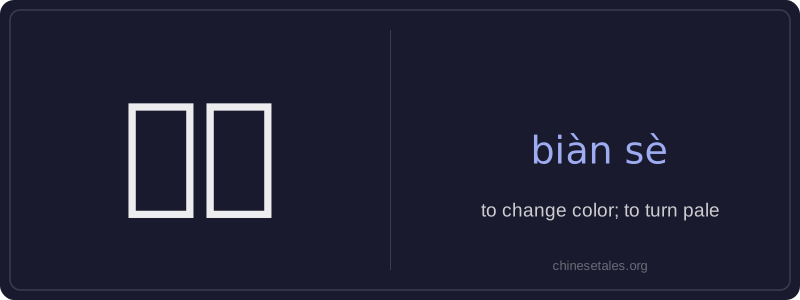
‘变色’ literally means ‘to change color’ — combining 变 (biàn, ‘to change’) and 色 (sè, ‘color’). It describes a physical shift in hue, often due to environmental triggers, emotional reactions, or biological processes. In nature, it’s commonly used for animals like chameleons or octopuses that alter their skin color for camouflage or communication. The term can also describe human physiological responses: when someone turns pale from fear, shock, or illness, we say they ‘变色’ — though this usage is more literary or descriptive than colloquial.
While ‘变色’ functions primarily as a verb, it rarely appears as a standalone noun without modification (e.g., not *‘a 变色’); instead, it typically occurs in verb phrases like ‘会变色’ (can change color), ‘突然变色’ (suddenly changed color), or as part of compound nouns like ‘变色龙’ (chameleon). It carries no inherent positive or negative connotation — its meaning depends entirely on context.
Example Sentences
Related Words
见面
见面 literally means 'see face' — combining 见 (t
背后
背后 literally means 'back + behind' and functions
我的
我的 (wǒ de) is a possessive pronoun meaning 'my'
中学
'Zhōngxué' literally combines 'zhōng' (middle)
面条
‘面条’ (miàn tiáo) literally means ‘flour str
后来
Later (hòulái) is an adverb meaning 'afterwards'
在家
'Zài jiā' literally combines the preposition 'z
不对
不对 (bù duì) literally combines 不 (bù), meani