Word Explanation
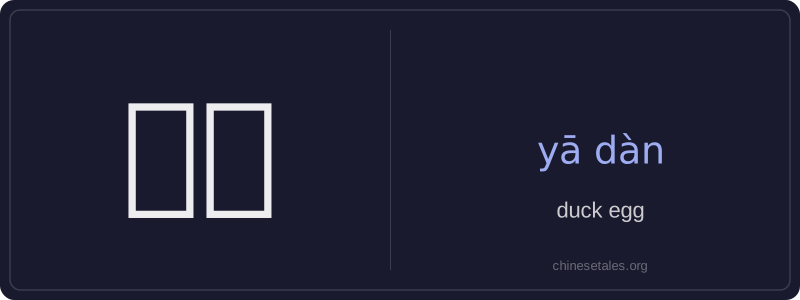
'鸭蛋' literally combines '鸭' (yā), meaning 'duck', and '蛋' (dàn), meaning 'egg'. It refers specifically to the egg laid by a duck, distinguishing it from chicken eggs (鸡蛋) or other poultry eggs. Duck eggs are larger than chicken eggs, with richer yolks and thicker whites, and are commonly used in Chinese cuisine—especially for making salted duck eggs (咸鸭蛋) or century eggs (皮蛋).
This compound noun follows the standard Chinese pattern of 'animal + egg' and is always written as two characters without spacing. It appears frequently in food-related contexts, including cooking instructions, market conversations, and nutritional discussions. While '鸭蛋' can occasionally be used metaphorically (e.g., in slang for 'failure'), that usage is rare and informal; learners should focus on its primary literal meaning in everyday speech and writing.
Example Sentences
Related Words
见面
见面 literally means 'see face' — combining 见 (t
背后
背后 literally means 'back + behind' and functions
我的
我的 (wǒ de) is a possessive pronoun meaning 'my'
中学
'Zhōngxué' literally combines 'zhōng' (middle)
面条
‘面条’ (miàn tiáo) literally means ‘flour str
后来
Later (hòulái) is an adverb meaning 'afterwards'
在家
'Zài jiā' literally combines the preposition 'z
不对
不对 (bù duì) literally combines 不 (bù), meani