Word Explanation
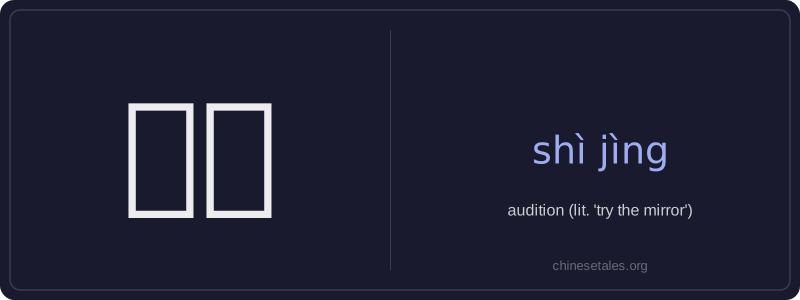
‘试镜’ literally means ‘try the mirror’, but in modern Chinese it refers to an audition — a formal evaluation where performers (actors, singers, models, etc.) demonstrate their skills before casting directors or producers. The term originates from early film and theater practice where performers would literally test how they appeared on camera or stage, often checking their reflection or image in a mirror or monitor.
This noun is used almost exclusively in entertainment, media, and performing arts contexts. It implies a competitive, professional setting — not casual practice or self-evaluation. While ‘试’ means ‘to try’ or ‘to test’, and ‘镜’ means ‘mirror’, together they evoke the idea of testing one’s appearance, presence, and performance quality for public viewing. It’s commonly heard in phrases like ‘参加试镜’ (attend an audition) or ‘通过试镜’ (pass an audition).
Example Sentences
Related Words
见面
见面 literally means 'see face' — combining 见 (t
背后
背后 literally means 'back + behind' and functions
我的
我的 (wǒ de) is a possessive pronoun meaning 'my'
中学
'Zhōngxué' literally combines 'zhōng' (middle)
面条
‘面条’ (miàn tiáo) literally means ‘flour str
后来
Later (hòulái) is an adverb meaning 'afterwards'
在家
'Zài jiā' literally combines the preposition 'z
不对
不对 (bù duì) literally combines 不 (bù), meani