Word Explanation
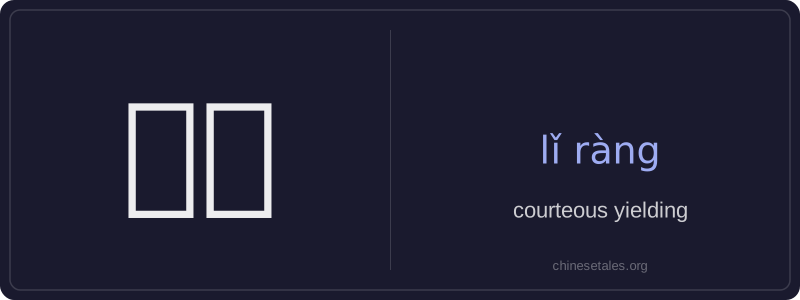
‘礼让’ (lǐ ràng) literally combines 礼 (lǐ), meaning ‘ritual,’ ‘courtesy,’ or ‘proper conduct,’ and 让 (ràng), meaning ‘to yield,’ ‘to give way,’ or ‘to defer.’ Together, they form a compound noun meaning ‘courteous yielding’ — the respectful act of stepping back to let others go first or take priority, especially in social interactions or public spaces. It reflects Confucian values emphasizing humility, respect for others, and harmonious coexistence.
This term is commonly used in contexts like traffic behavior (e.g., yielding to pedestrians), queuing etiquette, workplace courtesy, or family interactions where elders or guests are given precedence. While not a verb itself, 礼让 often appears as the subject or object of verbs like ‘体现’ (to demonstrate), ‘倡导’ (to advocate), or ‘践行’ (to practice). It carries a positive, morally commendable connotation and is frequently promoted in civic education and public service campaigns.
Example Sentences
Related Words
见面
见面 literally means 'see face' — combining 见 (t
背后
背后 literally means 'back + behind' and functions
我的
我的 (wǒ de) is a possessive pronoun meaning 'my'
中学
'Zhōngxué' literally combines 'zhōng' (middle)
面条
‘面条’ (miàn tiáo) literally means ‘flour str
后来
Later (hòulái) is an adverb meaning 'afterwards'
在家
'Zài jiā' literally combines the preposition 'z
不对
不对 (bù duì) literally combines 不 (bù), meani