Word Explanation
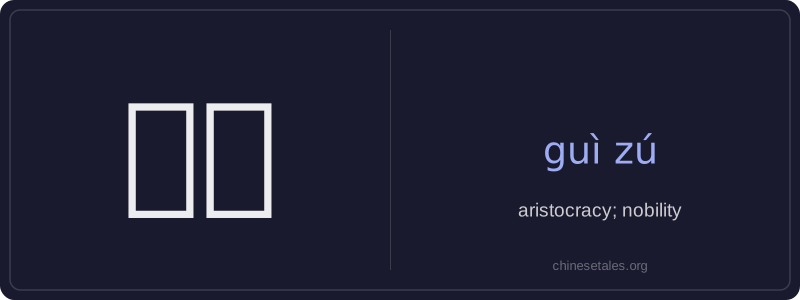
‘贵族’ (guì zú) literally combines ‘贵’ (guì), meaning ‘noble’, ‘precious’, or ‘high-status’, and ‘族’ (zú), meaning ‘clan’, ‘family’, or ‘group’. Together, it refers to the aristocracy — a privileged social class historically defined by hereditary titles, land ownership, and political influence, especially in pre-modern China and other traditional societies. In Chinese history, the term often evokes the elite families of dynastic eras, such as the imperial clans or high-ranking scholar-official lineages.
Today, ‘贵族’ is used both historically and figuratively: it appears in academic discussions of feudal systems, historical novels, and cultural commentary. It can also describe modern people or institutions perceived as refined, exclusive, or elitist — for example, ‘贵族学校’ (aristocratic school) implies prestige and high tuition. Unlike English ‘nobility’, which may sound neutral or formal, ‘贵族’ sometimes carries subtle connotations of distance, tradition, or even irony when applied to contemporary contexts.
Example Sentences
Related Words
见面
见面 literally means 'see face' — combining 见 (t
背后
背后 literally means 'back + behind' and functions
我的
我的 (wǒ de) is a possessive pronoun meaning 'my'
中学
'Zhōngxué' literally combines 'zhōng' (middle)
面条
‘面条’ (miàn tiáo) literally means ‘flour str
后来
Later (hòulái) is an adverb meaning 'afterwards'
在家
'Zài jiā' literally combines the preposition 'z
不对
不对 (bù duì) literally combines 不 (bù), meani