Word Explanation
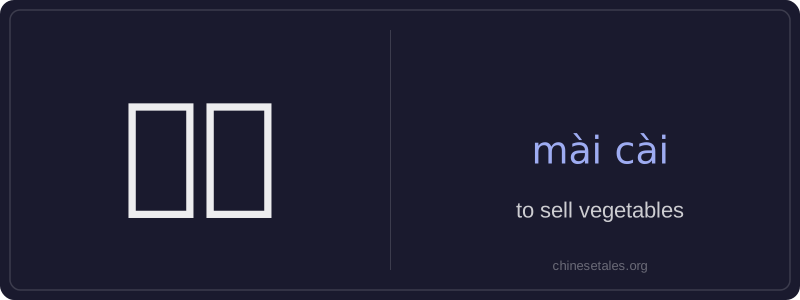
'卖菜' literally means 'to sell vegetables' — 卖 (mài) means 'to sell', and 菜 (cài) means 'vegetables' (or more broadly, 'dishes' or 'food', but in this compound it specifically refers to fresh produce). Together, they form a common verb phrase describing the act of selling fresh vegetables, typically at markets, street stalls, or small family-run shops. It emphasizes the vendor’s role and is often used to describe livelihoods, daily work routines, or local commerce.
This term carries a down-to-earth, practical connotation — it’s frequently heard in contexts about rural life, urban street economies, or generational family businesses. While 卖菜 can appear in neutral descriptions, it sometimes subtly implies modest income or hard work. It is not used for high-end or processed food sales — those would use terms like '卖有机食品' (sell organic food) or '卖预制菜' (sell prepared meals). The phrase is almost always verbal and rarely nominalized without additional grammar (e.g., '卖菜的' means 'vegetable seller').
Example Sentences
Related Words
见面
见面 literally means 'see face' — combining 见 (t
背后
背后 literally means 'back + behind' and functions
我的
我的 (wǒ de) is a possessive pronoun meaning 'my'
中学
'Zhōngxué' literally combines 'zhōng' (middle)
面条
‘面条’ (miàn tiáo) literally means ‘flour str
后来
Later (hòulái) is an adverb meaning 'afterwards'
在家
'Zài jiā' literally combines the preposition 'z
不对
不对 (bù duì) literally combines 不 (bù), meani