Word Explanation
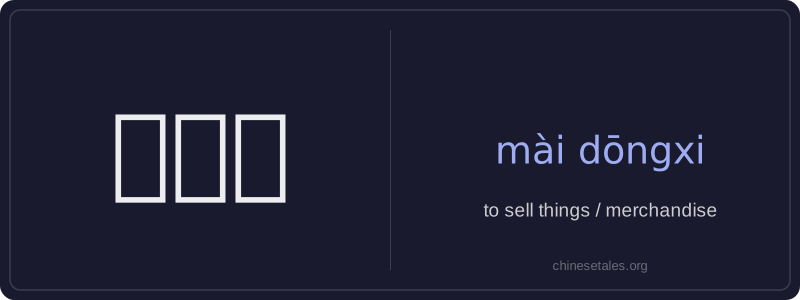
'卖东西' literally combines '卖' (to sell) with '东西' (things, stuff, merchandise), forming a common verb phrase meaning 'to sell things' or 'to sell goods'. While '东西' alone can mean 'thing(s)' in a general sense, in this compound it specifically refers to items intended for sale — not abstract concepts or people. The phrase is neutral in register and widely used in everyday spoken and written Chinese, especially when describing small-scale or informal selling activities like street vending, flea markets, or online resale.
Grammatically, '卖东西' functions as a transitive verb and often appears with objects (e.g., 卖东西给顾客), duration complements (e.g., 卖了三年东西), or aspect particles like 了 or 着. It’s rarely used in formal business contexts where terms like '销售商品' (to market goods) are preferred. The phrase emphasizes the action of selling tangible items rather than services or intangible assets.
Example Sentences
Related Words
见面
见面 literally means 'see face' — combining 见 (t
背后
背后 literally means 'back + behind' and functions
我的
我的 (wǒ de) is a possessive pronoun meaning 'my'
中学
'Zhōngxué' literally combines 'zhōng' (middle)
面条
‘面条’ (miàn tiáo) literally means ‘flour str
后来
Later (hòulái) is an adverb meaning 'afterwards'
在家
'Zài jiā' literally combines the preposition 'z
不对
不对 (bù duì) literally combines 不 (bù), meani