Word Explanation
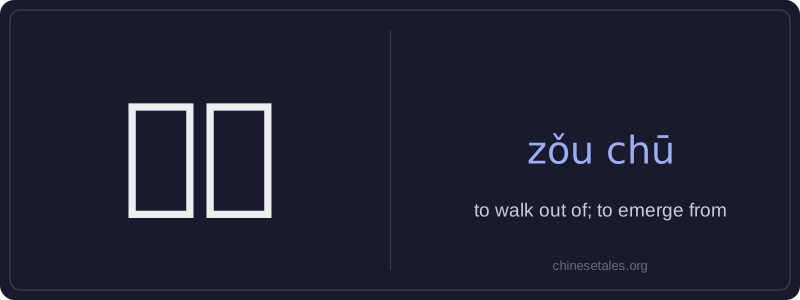
走出 is a separable verb meaning 'to walk out of' or 'to emerge from' a physical space, situation, or abstract condition. It combines 走 (zǒu, 'to walk') and 出 (chū, 'out'), with the core idea of movement from inside to outside — literally or figuratively. While it can describe simple physical exit (e.g., walking out of a room), it’s frequently used metaphorically to express overcoming challenges, escaping hardship, or transitioning into a new phase (e.g.,走出困境 'emerge from difficulty'). The verb often appears in written and formal spoken Chinese, especially in news, literature, and motivational contexts.
Unlike single-character verbs, 走出 requires an object or complement indicating where or what one exits from — typically followed by a noun phrase (e.g., 走出教室) or a directional complement like 走出来. It does not take aspect particles like 了 or 过 directly after the verb itself; instead, these attach to the full compound or its complement (e.g., 走出了教室, not 走出了). Its tone and register lean slightly formal but remain widely understood in everyday speech when describing meaningful transitions.
Example Sentences
Related Words
见面
见面 literally means 'see face' — combining 见 (t
背后
背后 literally means 'back + behind' and functions
我的
我的 (wǒ de) is a possessive pronoun meaning 'my'
中学
'Zhōngxué' literally combines 'zhōng' (middle)
面条
‘面条’ (miàn tiáo) literally means ‘flour str
后来
Later (hòulái) is an adverb meaning 'afterwards'
在家
'Zài jiā' literally combines the preposition 'z
不对
不对 (bù duì) literally combines 不 (bù), meani