Word Explanation
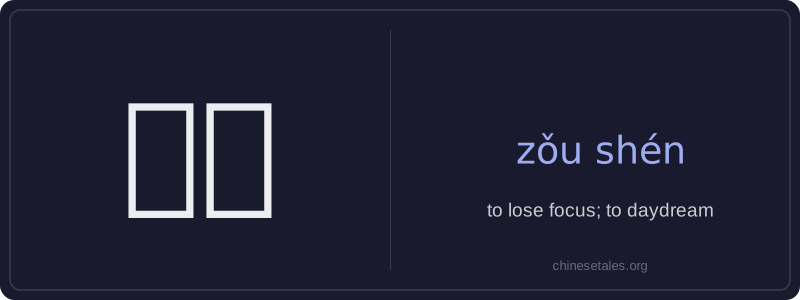
‘走神’ literally means 'the spirit (or mind) walks away' — a vivid, idiomatic expression for losing mental focus or drifting into daydreaming. The character 走 (zǒu) means 'to walk' or 'to leave', while 神 (shén) here refers to one’s consciousness, attention, or mental presence — not the supernatural meaning of 'god' or 'spirit'. Together, they convey the image of your mind wandering off from the present task or conversation.
This phrase is commonly used in informal and semi-formal contexts to describe momentary lapses in concentration — during class, meetings, reading, or even conversations. It’s neutral in tone (neither strongly negative nor positive), though frequent use may imply distraction or lack of discipline. Native speakers often say 走神了 (zǒu shén le) to indicate the action has just occurred, and it’s typically used with subjects like 我, 他, or 小明 — not as a noun but as a verb describing an internal mental state.
Example Sentences
Related Words
见面
见面 literally means 'see face' — combining 见 (t
背后
背后 literally means 'back + behind' and functions
我的
我的 (wǒ de) is a possessive pronoun meaning 'my'
中学
'Zhōngxué' literally combines 'zhōng' (middle)
面条
‘面条’ (miàn tiáo) literally means ‘flour str
后来
Later (hòulái) is an adverb meaning 'afterwards'
在家
'Zài jiā' literally combines the preposition 'z
不对
不对 (bù duì) literally combines 不 (bù), meani