Word Explanation
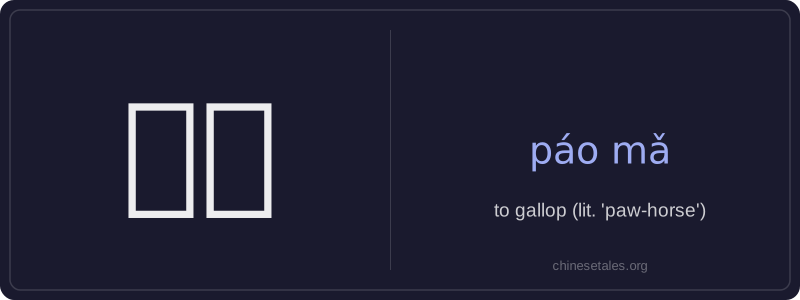
‘跑馬’ literally means 'to run horse' and functions as a verb meaning 'to gallop' — describing the fast, rhythmic gait of a horse at full speed. The character 跑 (páo) here is a literary or classical reading (distinct from the common speech reading pǎo, meaning 'to run' for people); 馬 (mǎ) means 'horse'. Together, they evoke an image of a horse racing across open ground, often used in poetic, descriptive, or traditional contexts rather than everyday conversation.
This term appears frequently in classical poetry, historical narratives, and equestrian descriptions — for example, when depicting cavalry charges, pastoral scenes, or metaphors for speed and freedom. It carries a slightly elevated or literary tone, and is rarely used in modern spoken Chinese to describe casual horseback riding (where 騎馬 qí mǎ is preferred). Learners should note that 跑馬 is not a compound noun like 'racecourse' (which is also written 跑馬場 but pronounced pǎo mǎ chǎng); context and tone determine both meaning and pronunciation.
Example Sentences
Related Words
见面
见面 literally means 'see face' — combining 见 (t
背后
背后 literally means 'back + behind' and functions
我的
我的 (wǒ de) is a possessive pronoun meaning 'my'
中学
'Zhōngxué' literally combines 'zhōng' (middle)
面条
‘面条’ (miàn tiáo) literally means ‘flour str
后来
Later (hòulái) is an adverb meaning 'afterwards'
在家
'Zài jiā' literally combines the preposition 'z
不对
不对 (bù duì) literally combines 不 (bù), meani