Word Explanation
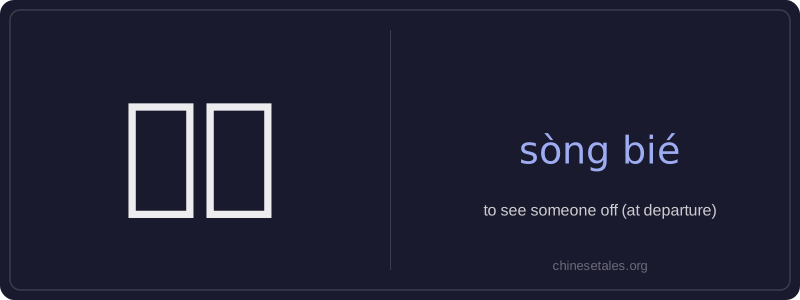
'Sòng bié' literally combines 'sòng' (to send, to deliver) and 'bié' (to part, to separate), together meaning the act of accompanying someone to a departure point—such as a train station, airport, or bus stop—to bid them farewell. It emphasizes the gesture of presence and care during parting, not just saying goodbye verbally.
This verb is commonly used in both spoken and written Chinese, especially in contexts involving travel, migration, or temporary separation. While it can describe physical escorting, it also carries emotional weight—conveying concern, respect, or affection. It’s often used in formal settings (e.g., official delegations seeing off guests) and intimate ones (e.g., family members seeing off a student studying abroad). Unlike simple farewells like 'zài jiàn', 'sòng bié' implies active participation in the departure process.
Example Sentences
Related Words
见面
见面 literally means 'see face' — combining 见 (t
背后
背后 literally means 'back + behind' and functions
我的
我的 (wǒ de) is a possessive pronoun meaning 'my'
中学
'Zhōngxué' literally combines 'zhōng' (middle)
面条
‘面条’ (miàn tiáo) literally means ‘flour str
后来
Later (hòulái) is an adverb meaning 'afterwards'
在家
'Zài jiā' literally combines the preposition 'z
不对
不对 (bù duì) literally combines 不 (bù), meani