Word Explanation
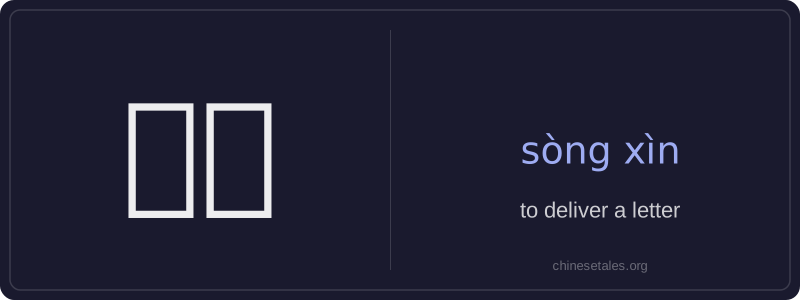
'送信' literally combines '送' (sòng), meaning 'to send' or 'to deliver', and '信' (xìn), meaning 'letter' or 'message'. Together, it means 'to deliver a letter' — specifically the physical act of carrying and handing over a written message, often by hand or via a courier. Historically, it referred to messengers or postmen delivering mail; today, it’s still used in contexts involving traditional postal services, school assignments (e.g., students delivering notes), or figurative references to passing on information reliably.
The term carries a sense of responsibility and personal involvement — unlike '寄信' (jì xìn), which emphasizes mailing through the postal system, '送信' implies direct, often face-to-face, delivery. It’s commonly heard in stories, historical dramas, or everyday descriptions of someone entrusted with an important note. While less frequent in digital communication contexts, it remains vivid and concrete in both spoken and written Chinese, especially when emphasizing effort, trust, or immediacy.
Example Sentences
Related Words
见面
见面 literally means 'see face' — combining 见 (t
背后
背后 literally means 'back + behind' and functions
我的
我的 (wǒ de) is a possessive pronoun meaning 'my'
中学
'Zhōngxué' literally combines 'zhōng' (middle)
面条
‘面条’ (miàn tiáo) literally means ‘flour str
后来
Later (hòulái) is an adverb meaning 'afterwards'
在家
'Zài jiā' literally combines the preposition 'z
不对
不对 (bù duì) literally combines 不 (bù), meani