Word Explanation
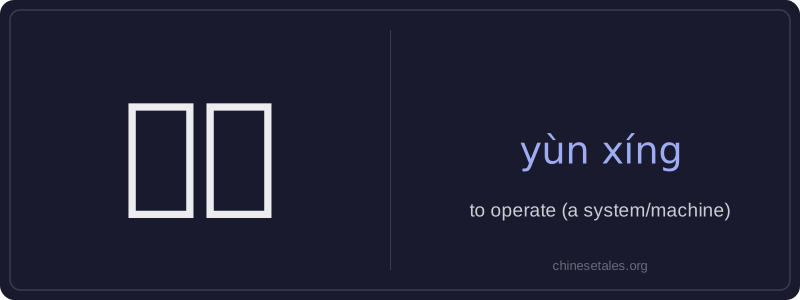
'运行' (yùn xíng) is a verb meaning 'to operate' or 'to run', especially in the context of machines, systems, software, or processes. It combines 运 (yùn), which conveys movement, transportation, or functioning, and 行 (xíng), meaning 'to go', 'to act', or 'to function'. Together, they emphasize the active, ongoing process of a system performing its intended function — not just starting up, but working smoothly and continuously.
This word is commonly used in technical, administrative, and daily life contexts: computers running programs, trains operating on schedule, businesses functioning normally, or even biological systems (e.g., the heart running properly). It implies stable, purposeful activity rather than mere motion or existence. Unlike general verbs like 'work' (工作), 运行 focuses on internal mechanics and systemic functionality, and is rarely used for people performing tasks.
Example Sentences
Related Words
见面
见面 literally means 'see face' — combining 见 (t
背后
背后 literally means 'back + behind' and functions
我的
我的 (wǒ de) is a possessive pronoun meaning 'my'
中学
'Zhōngxué' literally combines 'zhōng' (middle)
面条
‘面条’ (miàn tiáo) literally means ‘flour str
后来
Later (hòulái) is an adverb meaning 'afterwards'
在家
'Zài jiā' literally combines the preposition 'z
不对
不对 (bù duì) literally combines 不 (bù), meani