Word Explanation
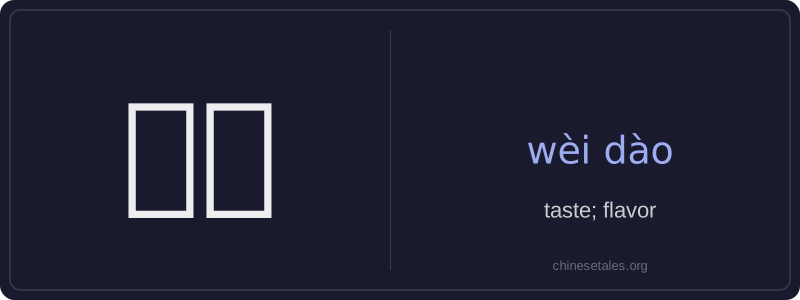
‘Wèi dào’ literally combines 味 (wèi), meaning ‘taste’ or ‘sensation of flavor,’ and 道 (dào), which here functions as a nominal suffix indicating ‘way,’ ‘kind,’ or ‘type.’ Together, they form the compound noun meaning ‘taste’ or ‘flavor’—referring both to the sensory experience on the tongue (e.g., sweet, sour, umami) and, more broadly, to the distinctive character or essence of something, such as a place, memory, or artistic work.
In everyday use, ‘wèi dào’ appears frequently in food contexts—asking about or describing how something tastes—but it also extends metaphorically: a poem might have a ‘classical wèi dào,’ or an old alleyway might carry the ‘wèi dào of history.’ Unlike the verb ‘chī’ (to eat) or adjective ‘hǎo chī’ (delicious), ‘wèi dào’ is strictly a noun and requires appropriate measure words (e.g., yì zhǒng wèi dào — ‘a kind of flavor’) or verbs like ‘yǒu’ (has), ‘gǎn jué’ (feel), or ‘xiǎng’ (smell/taste) to complete its meaning.
Example Sentences
Related Words
见面
见面 literally means 'see face' — combining 见 (t
背后
背后 literally means 'back + behind' and functions
我的
我的 (wǒ de) is a possessive pronoun meaning 'my'
中学
'Zhōngxué' literally combines 'zhōng' (middle)
面条
‘面条’ (miàn tiáo) literally means ‘flour str
后来
Later (hòulái) is an adverb meaning 'afterwards'
在家
'Zài jiā' literally combines the preposition 'z
不对
不对 (bù duì) literally combines 不 (bù), meani