Word Explanation
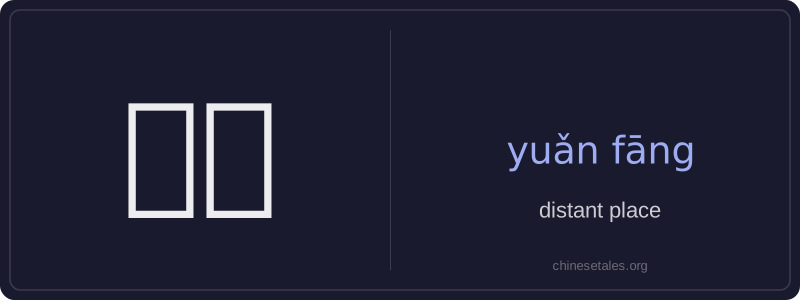
'远方' literally combines '远' (yuǎn), meaning 'distant' or 'far', and '方' (fāng), meaning 'direction' or 'region'. Together, they form a poetic, slightly literary noun meaning 'a distant place'—often implying somewhere beyond one’s immediate surroundings, perhaps abroad, in another province, or even metaphorically 'far away in time or experience'. It evokes a sense of longing, aspiration, or separation.
The term is commonly used in written Chinese, songs, poetry, and formal speech—not everyday casual talk. It rarely refers to a specific location but rather conveys emotional or spatial distance. You’ll often see it paired with verbs like '思念' (to miss), '奔赴' (to head toward), or '来自' (to come from). Unlike '外地' (another city/province) or '国外' (abroad), '远方' carries a softer, more evocative tone—less geographical precision, more emotional resonance.
Example Sentences
Related Words
见面
见面 literally means 'see face' — combining 见 (t
背后
背后 literally means 'back + behind' and functions
我的
我的 (wǒ de) is a possessive pronoun meaning 'my'
中学
'Zhōngxué' literally combines 'zhōng' (middle)
面条
‘面条’ (miàn tiáo) literally means ‘flour str
后来
Later (hòulái) is an adverb meaning 'afterwards'
在家
'Zài jiā' literally combines the preposition 'z
不对
不对 (bù duì) literally combines 不 (bù), meani