Word Explanation
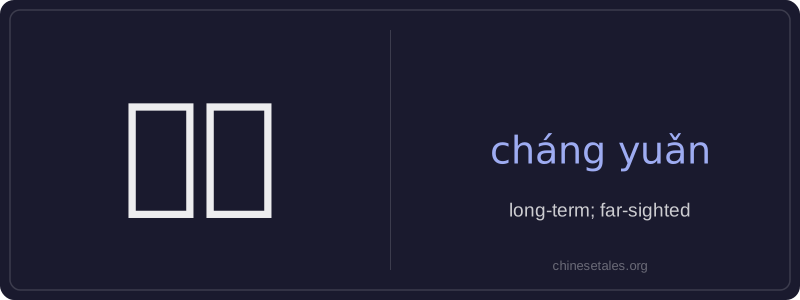
长远 (cháng yuǎn) is an adjective meaning 'long-term' or 'far-sighted', emphasizing duration over time and strategic foresight. The character 长 (cháng) means 'long' in the sense of time or distance, while 远 (yuǎn) means 'far' — together, they intensify the idea of looking well into the future, beyond immediate concerns. It’s commonly used to describe plans, goals, interests, benefits, or consequences that extend over years or even generations.
This word often appears in formal or semi-formal contexts — such as policy discussions, business strategy, education, or personal development — where careful planning and sustainability matter. Unlike colloquial terms like 将来 (jiānglái, 'the future'), 长远 carries a stronger connotation of wisdom, responsibility, and deliberate perspective. It rarely stands alone; instead, it modifies nouns (e.g., 长远计划, 长远利益) or follows verbs like 考虑 (kǎolǜ, 'to consider') or 着眼 (zhuóyǎn, 'to focus on').
Example Sentences
Related Words
见面
见面 literally means 'see face' — combining 见 (t
背后
背后 literally means 'back + behind' and functions
我的
我的 (wǒ de) is a possessive pronoun meaning 'my'
中学
'Zhōngxué' literally combines 'zhōng' (middle)
面条
‘面条’ (miàn tiáo) literally means ‘flour str
后来
Later (hòulái) is an adverb meaning 'afterwards'
在家
'Zài jiā' literally combines the preposition 'z
不对
不对 (bù duì) literally combines 不 (bù), meani