Word Explanation
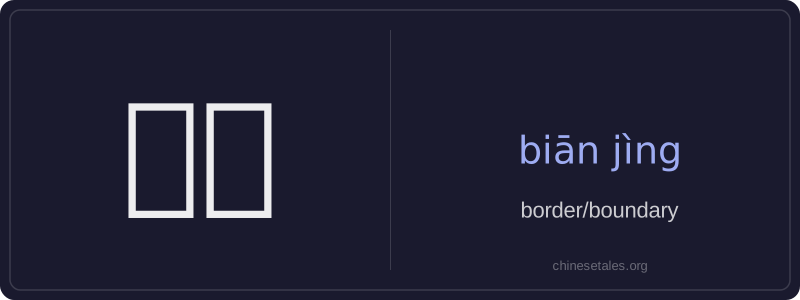
边境 (biān jìng) literally combines 边 (biān), meaning 'edge' or 'side', and 境 (jìng), meaning 'territory' or 'realm'. Together, they refer to the official line separating two countries or administrative regions — the national border. It emphasizes a politically defined, often guarded boundary, not just a geographical line. You’ll commonly encounter this term in news reports, travel advisories, immigration contexts, and discussions about sovereignty or security.
Unlike more general words for 'boundary' like 界限 (jièxiàn), 边境 carries strong geopolitical weight and implies formal recognition by states. It’s typically used with modifiers like 中美边境 (China–US border) or 沿边境 (along the border). The word appears frequently in compound nouns such as 边境检查 (border inspection), 边境城市 (border city), and 边境巡逻 (border patrol).
Example Sentences
Related Words
见面
见面 literally means 'see face' — combining 见 (t
背后
背后 literally means 'back + behind' and functions
我的
我的 (wǒ de) is a possessive pronoun meaning 'my'
中学
'Zhōngxué' literally combines 'zhōng' (middle)
面条
‘面条’ (miàn tiáo) literally means ‘flour str
后来
Later (hòulái) is an adverb meaning 'afterwards'
在家
'Zài jiā' literally combines the preposition 'z
不对
不对 (bù duì) literally combines 不 (bù), meani