Word Explanation
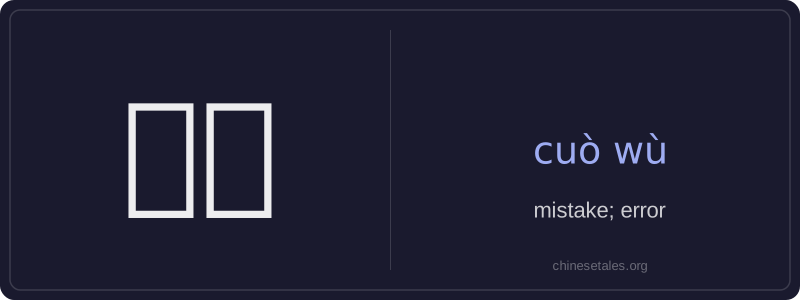
错误 (cuòwù) is a compound noun meaning 'mistake' or 'error'. It combines two characters with closely related meanings: 错 (cuò), which means 'wrong' or 'incorrect', and 误 (wù), which means 'to misunderstand' or 'to err'. Together, they emphasize a factual or procedural deviation from correctness — whether in speech, writing, calculation, judgment, or action. Unlike more casual terms like 失误 (shīwù) or 口误 (kǒuwù), 错误 carries a neutral-to-formal tone and is widely used in academic, technical, and everyday contexts.
This word often appears in feedback, corrections, or self-reflection — for example, when pointing out a typo in a text, an incorrect answer on a test, or a flawed assumption in reasoning. It can function as the subject, object, or complement in a sentence, and frequently pairs with verbs like 犯 (fàn, 'to commit'), 发现 (fāxiàn, 'to discover'), or 改正 (gǎizhèng, 'to correct'). While it’s rarely used as a verb itself, it’s essential for clear, precise communication about accuracy and accountability.
Example Sentences
Related Words
见面
见面 literally means 'see face' — combining 见 (t
背后
背后 literally means 'back + behind' and functions
我的
我的 (wǒ de) is a possessive pronoun meaning 'my'
中学
'Zhōngxué' literally combines 'zhōng' (middle)
面条
‘面条’ (miàn tiáo) literally means ‘flour str
后来
Later (hòulái) is an adverb meaning 'afterwards'
在家
'Zài jiā' literally combines the preposition 'z
不对
不对 (bù duì) literally combines 不 (bù), meani