Word Explanation
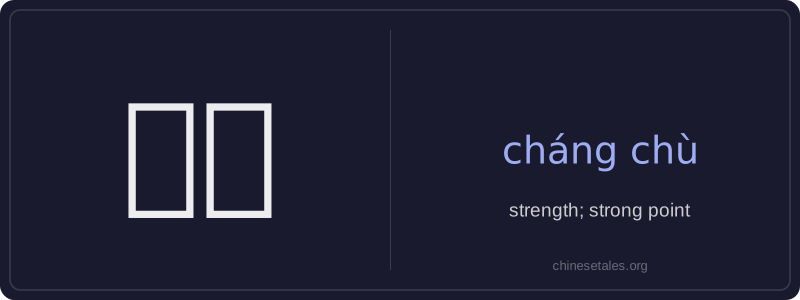
‘长处’ (cháng chù) is a noun meaning ‘strength’ or ‘strong point’—a personal quality, skill, or advantage that someone possesses. Literally, 长 (cháng) means ‘long’ or ‘excellent’, and 处 (chù) means ‘place’ or ‘aspect’; together, they form an idiomatic compound meaning ‘an excellent aspect’ of a person or thing. It’s commonly used in self-reflection, performance reviews, educational contexts, and interpersonal feedback.
This word carries a positive, constructive connotation and is often contrasted with 短处 (duǎn chù, ‘weakness’). Unlike more casual terms like 优点 (yōu diǎn), 长处 feels slightly formal and thoughtful—it appears frequently in writing, speeches, and professional development discussions. It’s typically used with verbs like 发挥 (fāhuī, ‘to bring into play’), 发现 (fāxiàn, ‘to discover’), or 认识 (rènshi, ‘to recognize’), and rarely stands alone without context.
Example Sentences
Related Words
见面
见面 literally means 'see face' — combining 见 (t
背后
背后 literally means 'back + behind' and functions
我的
我的 (wǒ de) is a possessive pronoun meaning 'my'
中学
'Zhōngxué' literally combines 'zhōng' (middle)
面条
‘面条’ (miàn tiáo) literally means ‘flour str
后来
Later (hòulái) is an adverb meaning 'afterwards'
在家
'Zài jiā' literally combines the preposition 'z
不对
不对 (bù duì) literally combines 不 (bù), meani