Word Explanation
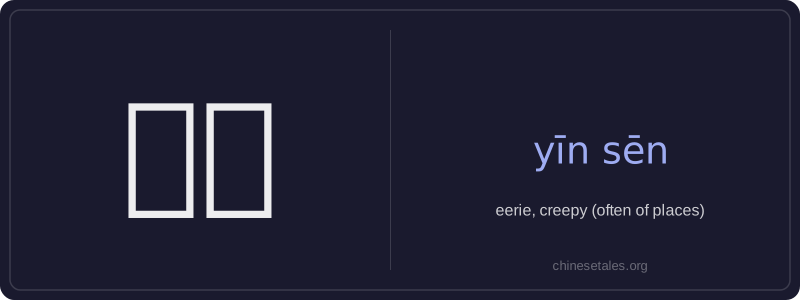
Yīn sēn describes a place or atmosphere that feels eerily dark, cold, and unsettling—often evoking fear or unease. The first character, 阴 (yīn), conveys darkness, shade, or yin energy (the passive, shadowy principle in Chinese philosophy), while 森 (sēn) means 'dense forest' and carries a sense of deep, tangled, overwhelming natural growth. Together, they suggest a place shrouded in gloom and thick vegetation—like an abandoned temple at dusk or a fog-draped graveyard—where silence feels heavy and unseen presences seem possible.
This word is almost exclusively used to describe physical environments: old buildings, forests, caves, alleys, or ruins. It emphasizes sensory impressions—dim light, chill air, muffled sounds, and visual obscurity—not psychological states. Unlike general words for 'scary', yīn sēn implies an objective, atmospheric quality rooted in setting, not just subjective fear. It’s literary but common in spoken descriptions of haunted or neglected places, especially in storytelling or travel narration.
Example Sentences
Related Words
见面
见面 literally means 'see face' — combining 见 (t
背后
背后 literally means 'back + behind' and functions
我的
我的 (wǒ de) is a possessive pronoun meaning 'my'
中学
'Zhōngxué' literally combines 'zhōng' (middle)
面条
‘面条’ (miàn tiáo) literally means ‘flour str
后来
Later (hòulái) is an adverb meaning 'afterwards'
在家
'Zài jiā' literally combines the preposition 'z
不对
不对 (bù duì) literally combines 不 (bù), meani