Word Explanation
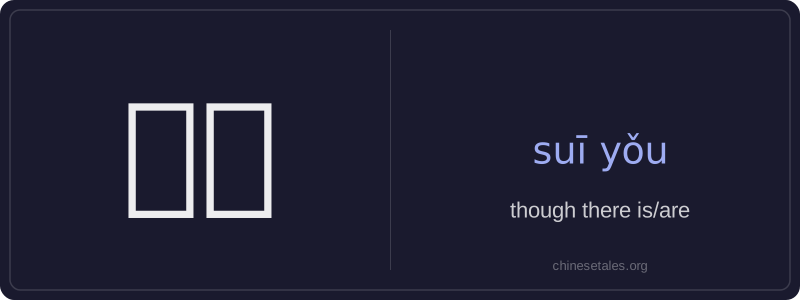
虽有 is a classical and formal conjunction meaning 'though there is/are' or 'although there exists'. It combines 虽 (suī), meaning 'although' or 'even though', and 有 (yǒu), meaning 'to have' or 'there is/are'. Together, they introduce a concessive clause that acknowledges the existence of something while implying a contrast with what follows — often a challenge, limitation, or unexpected outcome. It’s commonly used in written Chinese, formal speeches, essays, and news reports, but rarely in casual conversation.
This phrase typically appears at the beginning of a sentence or clause, followed by a noun phrase (e.g., 虽有困难, 虽有压力) and then a main clause introduced by 但、然而、却, or similar contrastive conjunctions. Unlike the more colloquial 尽管…但是, 虽有 emphasizes factual existence ('there is X') rather than general condition ('even if'). Its tone is neutral to slightly literary, and it carries a subtle sense of resignation or sober acknowledgment.
Example Sentences
Related Words
见面
见面 literally means 'see face' — combining 见 (t
背后
背后 literally means 'back + behind' and functions
我的
我的 (wǒ de) is a possessive pronoun meaning 'my'
中学
'Zhōngxué' literally combines 'zhōng' (middle)
面条
‘面条’ (miàn tiáo) literally means ‘flour str
后来
Later (hòulái) is an adverb meaning 'afterwards'
在家
'Zài jiā' literally combines the preposition 'z
不对
不对 (bù duì) literally combines 不 (bù), meani