Word Explanation
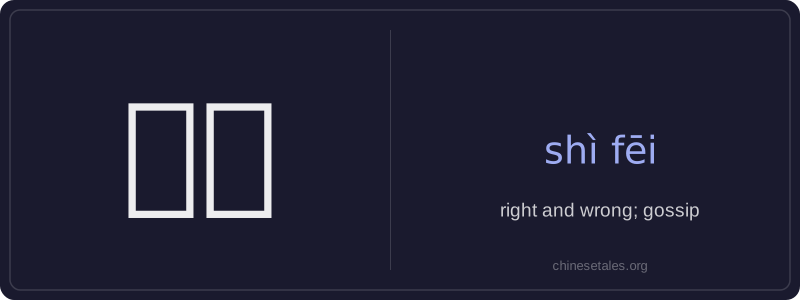
是非 literally combines 是 (‘is’, ‘right’, ‘correct’) and 非 (‘not’, ‘wrong’, ‘incorrect’), forming a classical compound meaning ‘right and wrong’ — the fundamental distinction between moral or factual correctness and error. It often appears in philosophical, legal, or ethical discussions about truth, justice, or judgment.
In modern spoken Chinese, 是非 frequently carries a negative, colloquial connotation: ‘gossip’, ‘idle talk’, or ‘trouble caused by petty disputes’. This usage emphasizes how rumors blur objective right/wrong distinctions and stir conflict. The word is usually uncountable and rarely used with measure words; it commonly follows verbs like 分清 (‘distinguish’), 招惹 (‘invite’), or 管 (‘meddle in’). Its tone is neutral in formal contexts but often implies criticism or caution in everyday speech.
Example Sentences
Related Words
见面
见面 literally means 'see face' — combining 见 (t
背后
背后 literally means 'back + behind' and functions
我的
我的 (wǒ de) is a possessive pronoun meaning 'my'
中学
'Zhōngxué' literally combines 'zhōng' (middle)
面条
‘面条’ (miàn tiáo) literally means ‘flour str
后来
Later (hòulái) is an adverb meaning 'afterwards'
在家
'Zài jiā' literally combines the preposition 'z
不对
不对 (bù duì) literally combines 不 (bù), meani